Track Your Vehicle's Mileage Without Errors
A missed oil change, a forgotten service appointment, or fuel costs that seem too high almost always come down to the same thing: nobody knows for sure when and how far the vehicle has traveled. Vehicle mileage tracking turns this basic information into better decisions, whether you're caring for the family car, calculating delivery profits, or managing vehicles shared by a team.
Mileage is about more than glancing at the odometer now and then. It provides context for every refuel, maintenance, repair, and dashboard alert. When tracking is consistent, it's easier to act before a costly problem occurs and to understand the true cost of keeping each vehicle on the road.
Why mileage changes vehicle management
Most preventive services are recommended based on distance intervals, time intervals, or both. Engine oil, filters, tires, brake fluid, belts, suspension, and regular inspections all have different schedules. Those who rely on memory alone can either do services earlier than needed or, worse, drive past the recommended limit.
Recording mileage at each event creates a reliable timeline. By noting that your tires were replaced at 62,000 miles, for example, you no longer depend on lost receipts or rough estimates. When it's time to rotate tires, align the wheels, or assess wear, the history will be right there.
This tracking also protects your resale value. A buyer is more likely to trust a vehicle with organized maintenance records and documented mileage than vague promises that it was "always well maintained." For cars, motorcycles, vans, and trucks, clear documentation can help justify the price you're asking.
How to track your vehicle's mileage
The method needs to fit your routine. Someone who drives on weekends might update mileage before refueling or when they get a monthly reminder. A rideshare or delivery driver, however, needs to record information more frequently, since small changes in fuel consumption or cost per mile affect the bottom line.
The key is keeping a current reading and linking it to the right events. Whenever you refuel, service, spend money, inspect, or change drivers, record the current mileage. Over time, tracking stops feeling like a chore and starts answering practical questions: how many miles does this vehicle cover per month? When's the next service due? Was this expense out of the ordinary? What's the cost per mile I'm working?
Start with your current odometer reading and the last service
You don't need to recreate the entire history of your vehicle to get started. Write down the current mileage and record the last service you can confirm, such as an oil change, inspection, or tire replacement. Include the date, amount paid, and what was done.
If you have receipts, photos, or old records, add them over time. The goal isn't to build a perfect file on day one. It's to make sure you don't lose any new information going forward.
Record fuel purchases consistently
Fuel is one of the most useful indicators for tracking vehicle use. At each fill-up, record the odometer reading, liters (or gallons), total cost, and fuel type. For the most accurate consumption reading, compare full fill-ups in sequence rather than trying to calculate with a partially full tank.
Miles per gallon can vary with traffic, cargo, air conditioning, driving style, and route. That's why one poor fill-up doesn't confirm a problem. But a persistent drop in efficiency deserves attention, especially if it's paired with engine troubles, dashboard lights, or rising costs.
Set reminders for both mileage and time intervals
Some maintenance depends more on time, like insurance, registration, and brake fluid. Others depend directly on use, like oil changes, tire rotation, and certain inspections. The best tracking combines both criteria and acts on whichever comes first.
An oil change reminder every 10,000 miles might not work for everyone. Check your owner's manual and adjust the interval to match your actual driving conditions. Heavy traffic, frequent short trips, dust, regular heavy loads, and commercial use may call for earlier attention.
What to track beyond the number on your dashboard
Mileage becomes truly valuable when it's connected to costs and vehicle history. Just knowing that a van did 3,000 miles last month doesn't tell you if it was efficient, if it needed too many repairs, or whether the income covered the operation.
For a useful picture, record expenses like fuel, maintenance, parts, insurance, taxes, parking, tolls, and washing. If your vehicle generates income, also log earnings from rides, deliveries, service calls, or work done. Then you can compare revenue, expenses, and profit by period or per mile driven.
For professional drivers, this difference is critical. Two days with the same gross revenue can produce very different results if one involved more empty miles, tolls, high fuel consumption, or unexpected repairs. Revenue shows money coming in; complete tracking shows what actually stayed in your pocket.
Three routines for different needs
For a personal driver, a monthly update can be enough, as long as refueling and services are logged on the right dates. The focus is not missing service appointments, watching costs, and keeping the vehicle's history intact.
For those who work as a rideshare driver, courier, or field technician, it helps to check mileage at the start and end of each day. This routine lets you separate work and personal driving, monitor fuel use, and see whether the business is still profitable.
With a small fleet, the challenge shifts: making sure everyone records data the same way. Sharing history between drivers cuts down on confusing messages, keeps two people from scheduling the same service twice, and helps track vehicles used at different times. A daily checklist can also include odometer reading, fuel level, tire condition, lights, and dashboard alerts.
Spreadsheet, notebook, or app?
A spreadsheet can work for someone managing a single vehicle who enjoys organizing data by hand. It offers flexibility but demands the discipline to open the file, do the math, and set reminders. A notebook is quick and simple but makes it harder to look things up, share information, and compare costs over months.
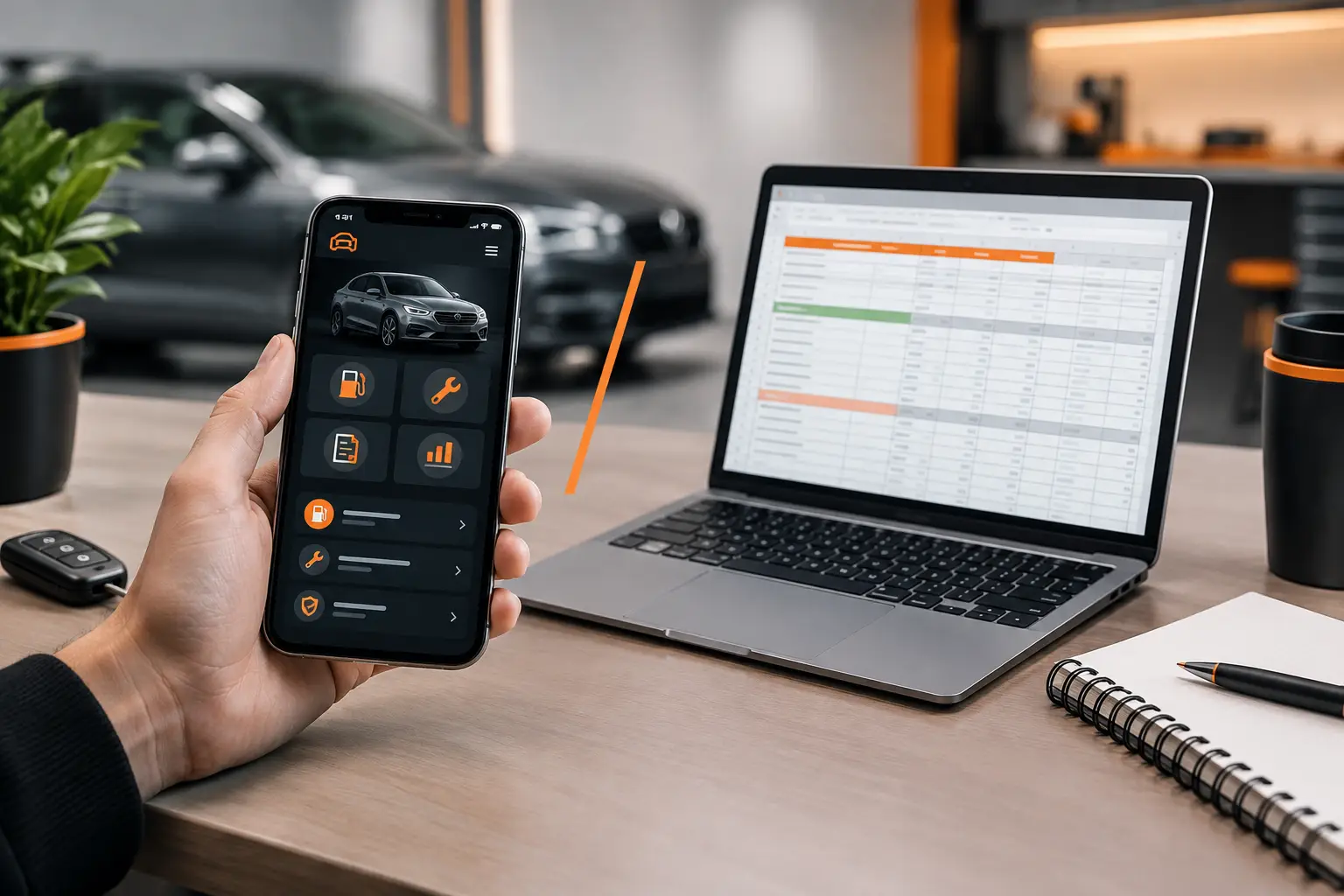
An app centralizes everything on your phone and lets you check data when you're at the pump, at the workshop, or in the vehicle. With Mine Garage, mileage can be linked to refueling, expenses, maintenance, income, and reminders, giving you a complete view of operations. If you use an OBD2 adapter, fault codes and readings can also be logged in the same history.
The best tool is the one you actually keep up with. If you forget to update a spreadsheet for weeks, advanced formulas won't help. If someone else also uses the motorcycle, car, or van, choose a system that makes sharing easy without relying on photos of receipts sent through chat.
Mistakes that make your history less reliable
The most common mistake is recording mileage only when a problem appears. That way, your data shows no trend and won't help you predict the next service. Another mistake is logging amounts without dates or odometer readings, making it impossible to know which period that expense belongs to.
Also avoid frequent estimates. If you don't have the exact reading on a given day, record it as soon as you can and flag that the information was delayed. An occasional small gap is better than creating imprecise numbers that distort consumption, cost per mile, and service intervals.
Finally, don't treat maintenance alerts as absolute commands. A reminder tells you it's time to check the owner's manual, your actual driving conditions, and the vehicle's history. Some services must be done right away; others can be planned safely. Tracking exists to support your decisions, not to replace professional judgment when there are failures or safety concerns.
Next time you look at your odometer, see it as more than just an accumulated number. Record it and use it to learn what your vehicle needs, what it costs, and how to keep it ready for your next trip or work day.