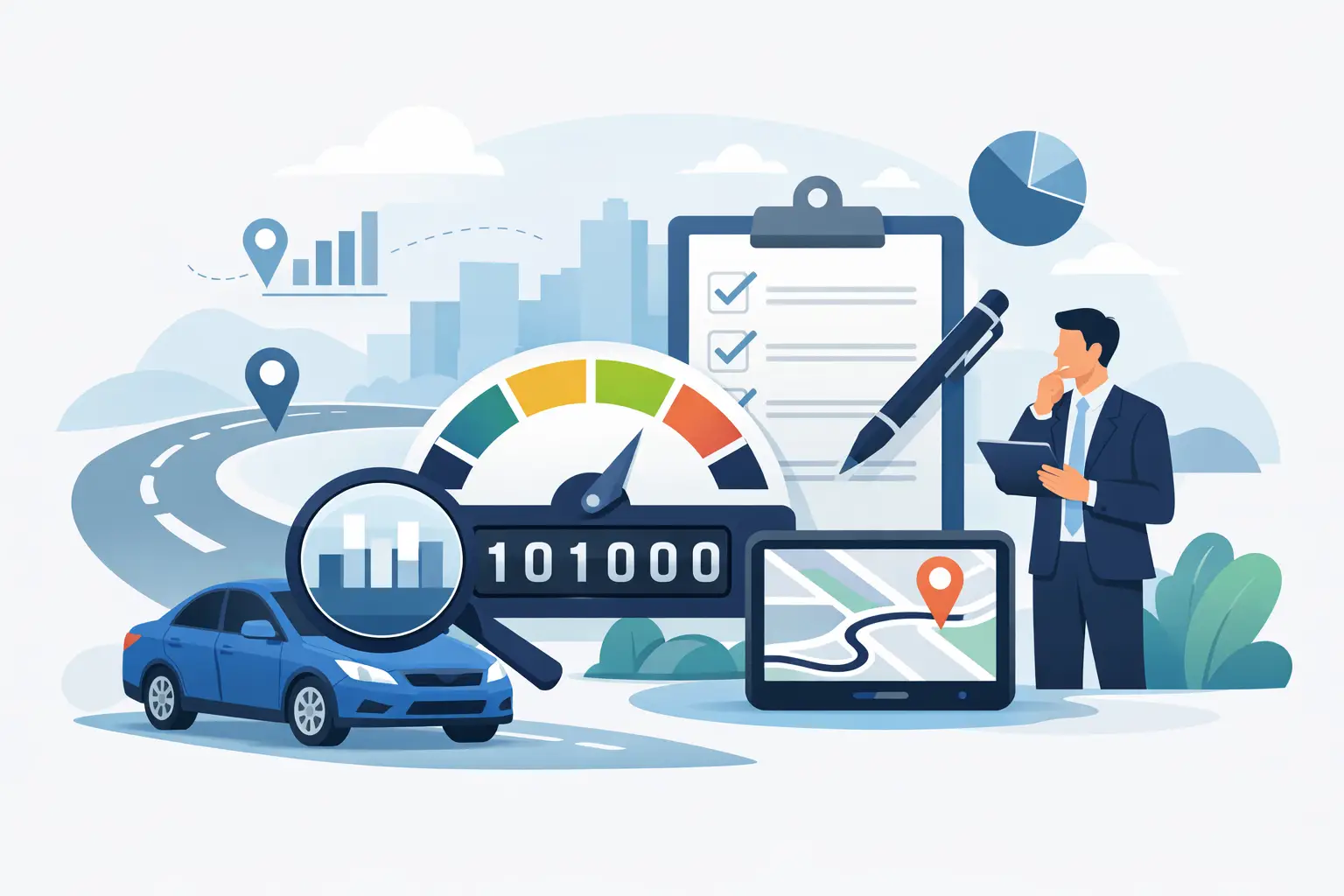
Tire Maintenance Tracking by Mileage: A Practical Guide
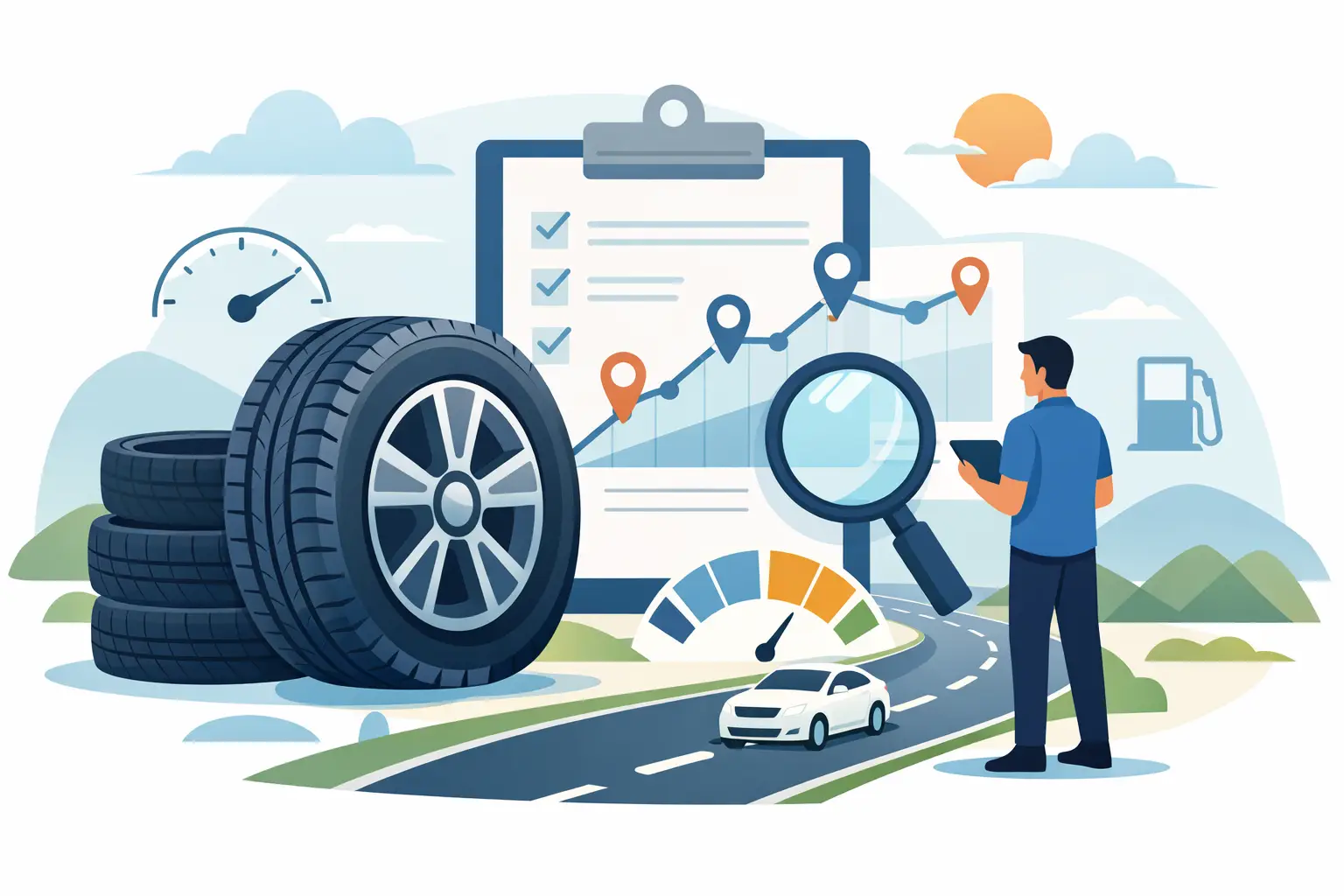
A tire rarely fails without warning signs. The problem is that in daily life, these signs get scattered between your dashboard's odometer reading, a forgotten receipt, and your memory of when the last rotation happened. Tracking tires by mileage turns this scattered information into a simple plan: know how many miles each set has traveled, which service is coming up next, and what it actually costs for your vehicle.
For drivers who use their car only on weekends, this prevents late replacements and unexpected expenses. For ride-share drivers, delivery workers, and teams managing vans or trucks, it's a direct way to protect safety, availability, and profit margins. A tire sitting in the shop or replaced before its time takes a bite out of any operation's bottom line.
Why track tires by mileage
Mileage is a practical reference because it connects wear to actual use. By recording the odometer reading at installation, rotation, repair, and replacement, you create a history that doesn't depend on memory. Over time, it becomes easier to identify whether a set is delivering the expected durability or wearing out too quickly.
This doesn't mean there's a universal number for replacing tires. The safety limit comes from tread depth, rubber condition, and visible damage. Mileage helps you schedule inspections and maintenance in advance: it doesn't replace checking for sidewall bulges, cuts, or a vibration that appeared yesterday.
There's also a clear financial benefit. Two tires of the same model can perform differently on different vehicles or routes. Urban traffic with heavy braking, uneven road surfaces, constant loads, improper inflation, and misalignment all shorten tire life. When you track distance and costs, you stop comparing just the purchase price and start comparing cost per mile.
What to record for reliable tracking
Start by recording the installed set: brand, model, size, purchase date, price paid, and vehicle mileage at installation. If you have a receipt, keep a photo or file with the record. This information helps with warranty claims and prevents confusion when it's time to evaluate a new purchase.
Next, update the odometer reading whenever anything tire-related happens. Rotations, alignments, balancing, puncture repairs, valve replacements, and full replacements should all go in the history. A small repair might seem irrelevant, but multiple repairs on the same tire change the decision about keeping it in service.
On vehicles with different tire positions, like some motorcycles, pickup trucks with mixed use, or commercial vehicles: it helps to identify each tire's position. On a regular car, at least noting whether wear is worse on the front or rear axle gives you better insight. The axle that handles traction, steering, and braking stress doesn't always wear the same as the other.
To create a routine that works, use four simple checkpoints:
- mileage and installation date of the set;
- periodic inspections of pressure, tread, and damage;
- rotation following the vehicle and tire manufacturer's recommendations;
- replacement or early evaluation if uneven wear, damage, or frequent pressure loss appears.
The goal isn't to record data for its own sake. Each entry should answer a useful question: when to inspect next, how much was spent, which tire had a problem, and whether the vehicle is wearing the set evenly.
Mileage, time, and condition work together
Even a car that doesn't drive much needs attention. Rubber ages, sun exposure affects the material, and long periods of inactivity can cause deformation. That's why effective tracking combines mileage with date and visual inspection.
The same applies to tires that still seem to have adequate tread. If there are cracks, deformation, wear concentrated on one edge, or persistent vibration, inspection shouldn't wait for the next reminder. Distance traveled helps you plan. Current condition determines urgency.
How to calculate tire cost per mile
Knowing cost per mile is especially useful for those who work with their vehicle. The calculation is simple: divide the total amount invested in the set by the miles it traveled before replacement. Include the purchase price, mounting, balancing, repairs, and, when relevant to your analysis: alignment.
Imagine a set of four tires that cost $700, including initial services, and traveled 25,000 miles before replacement. The estimated cost was about $0.03 per mile. If the next set costs a bit more but lasts 35,000 miles under similar conditions, it could be the more economical choice in the long run.
This comparison requires care. Don't compare tires used on completely different routes as if the result depended only on the brand. A delivery car carrying loads, hitting potholes, and braking dozens of times a day will have a different reality than a family vehicle used mainly on highways. The value of record-keeping is showing your actual usage pattern.
When to schedule rotation, alignment, and balancing
Rotation helps distribute wear among tires, but the right interval depends on your vehicle's manual, tire type, and drivetrain setup. Instead of guessing, set a reminder based on the manufacturer's recommendation and check tire condition at each service.
Alignment deserves attention when the car pulls to one side, the steering wheel sits off-center, you hit a pothole or curb hard, or wear appears more on one edge. Balancing is usually investigated when vibration appears in the steering wheel or body at a certain speed range. Doing these services at the right time can prevent a new tire from being lost much sooner than expected.
Tire pressure also needs to be part of your routine. The pressure specified on your vehicle's label or manual was set for specific load and use conditions. Underinflated tires tend to heat up more and wear the sidewalls; excess pressure can concentrate wear in the center of the tread. Measure with cold tires and don't rely on appearance alone.
Tire tracking for different types of drivers
For private drivers, the main benefit is predictability. You get a reminder before forgetting a rotation, keep receipts organized, and maintain a history that preserves your car's value for resale. Those managing multiple family vehicles also stop depending on conversations and loose notes.
For ride-share drivers, delivery services, or field-based work, tires are an operating cost. Mileage-based records let you compare spending on tires, fuel, maintenance, insurance, and income. This makes it easier to spot whether a route, vehicle type, or tire choice is cutting into real profit.
For small fleets, the challenge is coordinating several routines at once. A tire in poor condition can take a van off the road, delay service, and cost more than the replacement itself. Sharing a vehicle history helps managers and drivers record problems, track pending services, and make decisions based on data, not guesswork.
Centralize your history so you don't miss the right moment
A spreadsheet might work for someone very disciplined, but it usually fails when multiple vehicles, receipts, and drivers are involved. A vehicle management app brings mileage, costs, reminders, and receipts together in one place, accessible from your phone and a larger screen when needed.
In Mine Garage, you can record vehicle expenses and maintenance alongside your usage history. This makes it easier to connect tire replacement to other costs and understand how much your vehicle requires to keep running. For professional use, this view is even more valuable because it separates the feeling that "everything is expensive" from numbers showing exactly where your money goes.
Don't wait for your tire to reach its limit before you start tracking. Record the current mileage, note the condition of the installed set, and schedule your next inspection reminder. A few minutes of organization now can prevent an emergency replacement, a breakdown at work, and a rushed decision when buying the next set.