Shared Fleet with Clear Records

When two or more people use the same vehicles, problems rarely start with a major failure. They appear in the details: nobody knows who filled the tank last, a service got postponed, a fine arrives with no one to blame for it, or the car comes back with a noise no one can explain. A shared fleet only runs smoothly when usage leaves a clear trail.
This applies to a family with two cars, a delivery team with motorcycles, a service company with vans, or drivers taking turns with the same vehicle. Sharing reduces idle vehicles and can lower costs, but it also increases the need for organization. Without a simple process, the expected savings can turn into missed maintenance, arguments, and spending that's hard to justify.
What a shared fleet needs to track
It's not enough to know how many vehicles you own. The key is understanding the history of each one and what happened between each use. A shared car, motorcycle, or van should have current information about usage, mileage, fuel, expenses, general condition, and upcoming services.
Ideally, this tracking should be quick enough to fit into daily routines. If logging a trip, a fuel fill-up, or a breakdown depends on paper, complex spreadsheets, and multiple messages, part of your team will put it off. And what gets put off usually gets lost.
Four types of records prevent most confusion:
- Who used the vehicle and when. Recording the driver, date, time, and odometer reading at departure and return helps assign costs, identify usage patterns, and locate issues.
- Fuel and expenses. Every fill-up, toll, wash, parking fee, part, or repair should be linked to the vehicle. For those working in delivery, transport, or field service, it also makes sense to compare these costs against the revenue generated.
- Maintenance completed and planned. Oil changes, tires, brakes, filters, registration renewals, and inspections can't depend on one person's memory. The history shows what was done and reminders help anticipate the next service.
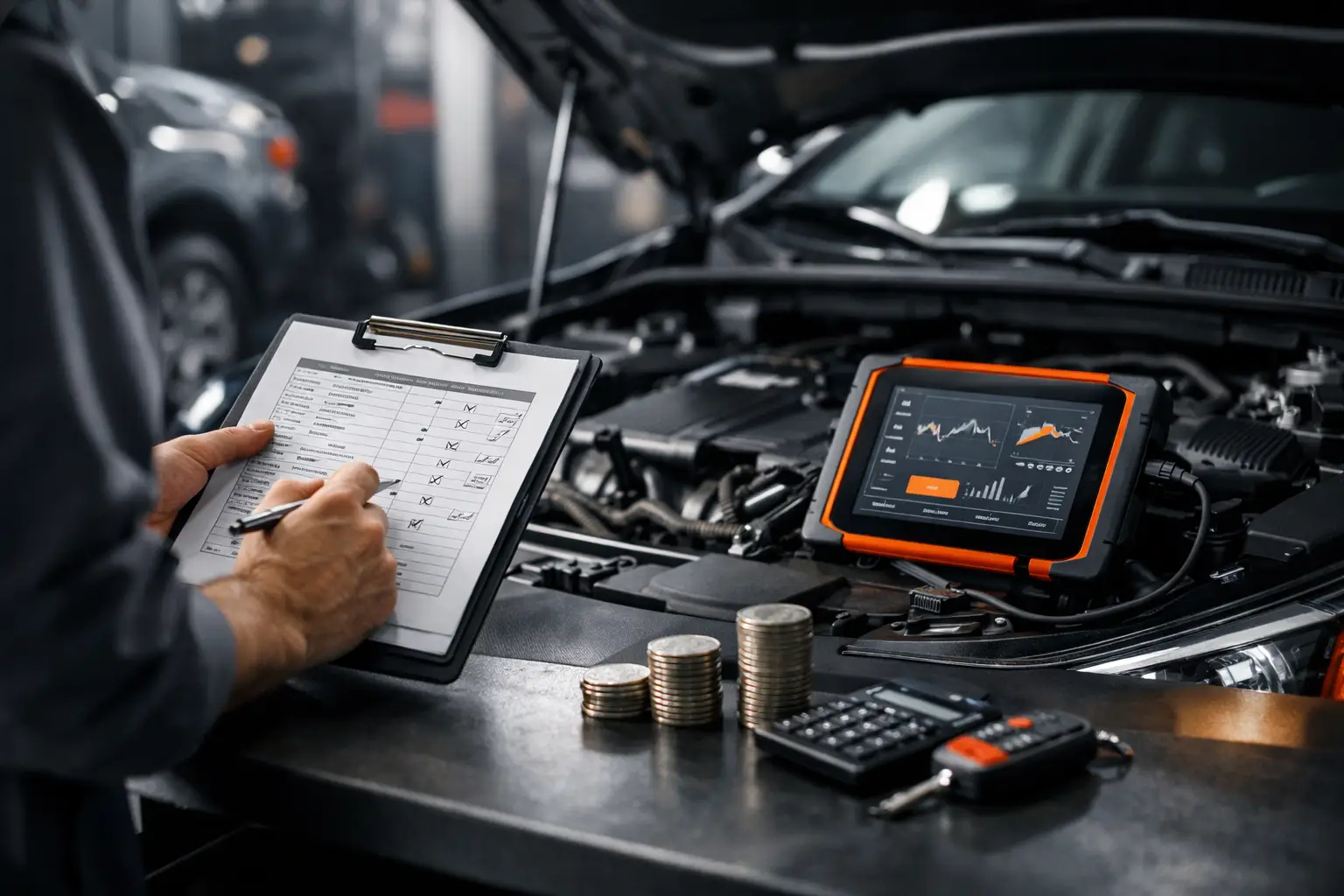
- Vehicle condition. A simple inspection before and after each use reduces disputes over scratches, missing items, dashboard lights, and visible damage. It doesn't need to be elaborate, but it needs to be consistent.
Recording isn't surveillance
In a small fleet, there's often resistance to tracking because it feels like monitoring. In reality, good record-keeping protects both the manager and the driver. If a check engine light appeared on the dashboard before the shift started, the driver shouldn't be held responsible for a problem that already existed.
The same logic applies to fuel and expenses. When each entry has a date, amount, mileage, and vehicle attached to it, the conversation stops being based on memory. The manager sees the data, and the driver can prove what they did.
How to organize the shared fleet in daily operations
Start by creating a complete record for each vehicle. Include the license plate, vehicle type, current mileage, relevant documents, service history, and items that need attention. For a professional operation, it's also worth recording the vehicle's main use, such as city deliveries, technical visits, or equipment transport.
Next, establish a pickup and return routine. It can be quick: check mileage, fuel level, exterior appearance, dashboard lights, and necessary equipment. For a service van, this check might include tools. For a delivery motorcycle, it might include the cargo box, tires, and safety gear. The important thing is to adapt the list to your operation without turning every departure into a lengthy inspection.
Also make it clear who can approve expenses and how they should be recorded. A burned-out bulb or a flat tire might need immediate action. Routine maintenance might require approval. Without this distinction, two risks emerge: the driver delays a necessary repair, or they approve an expense without anyone knowing the budget impact.
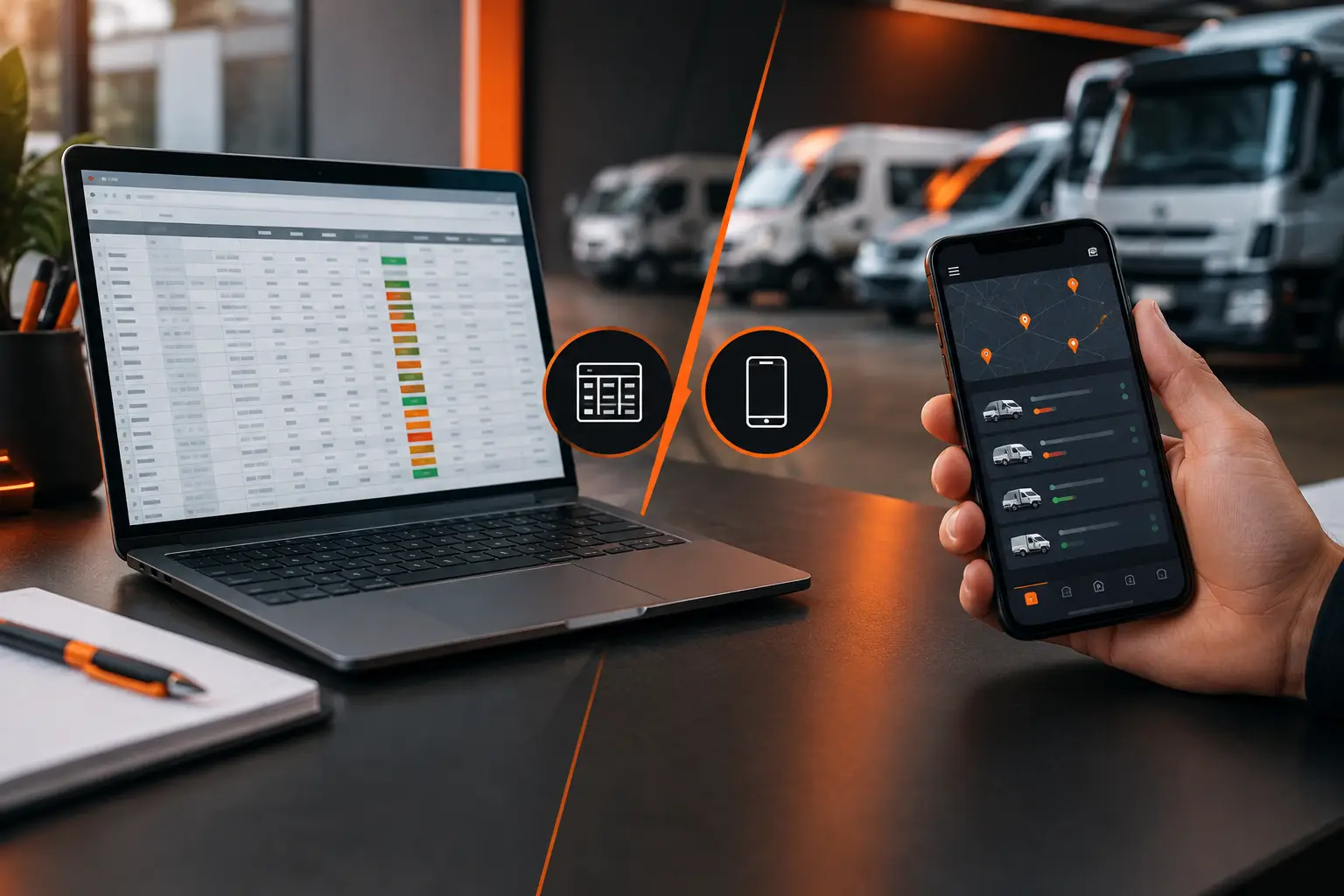
A centralized app helps because it keeps this information from being scattered across receipts, messages, and different spreadsheets. With Mine Garage, for example, you can bring together vehicles, maintenance, expenses, fuel fill-ups, checklists, and sharing in one place. This way, multiple people can track the history without depending on a single spreadsheet or the phone of whoever manages the fleet.
Define responsibilities without creating red tape
Every shared fleet needs someone responsible for watching for alerts and keeping information organized. This doesn't mean they do all the recording. Each driver can log their own fuel, report an issue, or complete a checklist, while the responsible person tracks pending items and approves major decisions.
It also helps to create clear rules for recurring situations. Who reports a breakdown? Where do you log a traffic fine? What happens when the odometer shows a service is coming due? What's the procedure if the vehicle comes back with less fuel than it left with? Clear answers keep everyone from using their own method.
Shared fleet for different uses
A family shares vehicles differently than a delivery company. That's why the level of detail should match the financial and operational impact of each vehicle.
For families, the focus is usually on preventing missed maintenance and organizing shared expenses. Knowing when the last oil change was, how much was spent on tires, and which car is available during a given week reduces surprises. The history is also helpful when selling the vehicle or understanding why costs have gone up.
For app-based drivers, delivery workers, and service providers, the vehicle is a work tool. In this case, tracking fuel, maintenance, mileage, and earnings lets you see the cost per period and per vehicle. A car that seems profitable might be eating into margins with high fuel consumption, repeated repairs, or frequent downtime.
For small businesses, the challenge includes coordination. A van out for service affects the schedule, customer service, and revenue. By tracking service due dates, checklists, and usage by driver, the business can schedule maintenance with less impact and act before a simple defect takes the vehicle out of service.
Which numbers deserve attention
A fleet doesn't need dozens of metrics to be well managed. Some basic data already help with better decisions: total cost per vehicle, fuel spending, average consumption, maintenance expenses, mileage driven, and periods when the vehicle was idle.
Reading these numbers requires context. High maintenance costs aren't always bad if they brought a reliable vehicle back to life and prevented a rushed replacement. Likewise, the lowest fuel cost doesn't guarantee the best result if the vehicle needs frequent repairs or doesn't meet your load and space requirements.
Compare vehicles doing similar work and watch trends, not just one isolated month. If consumption is rising gradually, if tires are wearing out faster, or if the same dashboard warning comes back more than once, something needs investigation before costs climb.
When sharing isn't the best choice
Shared fleets have limits. If vehicles are constantly unavailable when needed most, if drivers have to wait to work, or if routes are very different, maybe the current arrangement doesn't make sense. Sharing a vehicle reduces idle time, but can create lost productivity when there's constant competition for availability.
It also doesn't work well when there's no commitment to basic record-keeping. Technology makes the process easier, but it doesn't replace clear agreements. The answer might be to simplify the routine, reduce required fields, and explain why each record matters, rather than demand a level of tracking that nobody can maintain.
The best tracking is what fits at the end of each shift and stays useful the next month. When each vehicle has a reliable history, the fleet stops being a source of questions and starts showing, clearly, where to care better, where to save, and when to act before a problem shuts down operations.