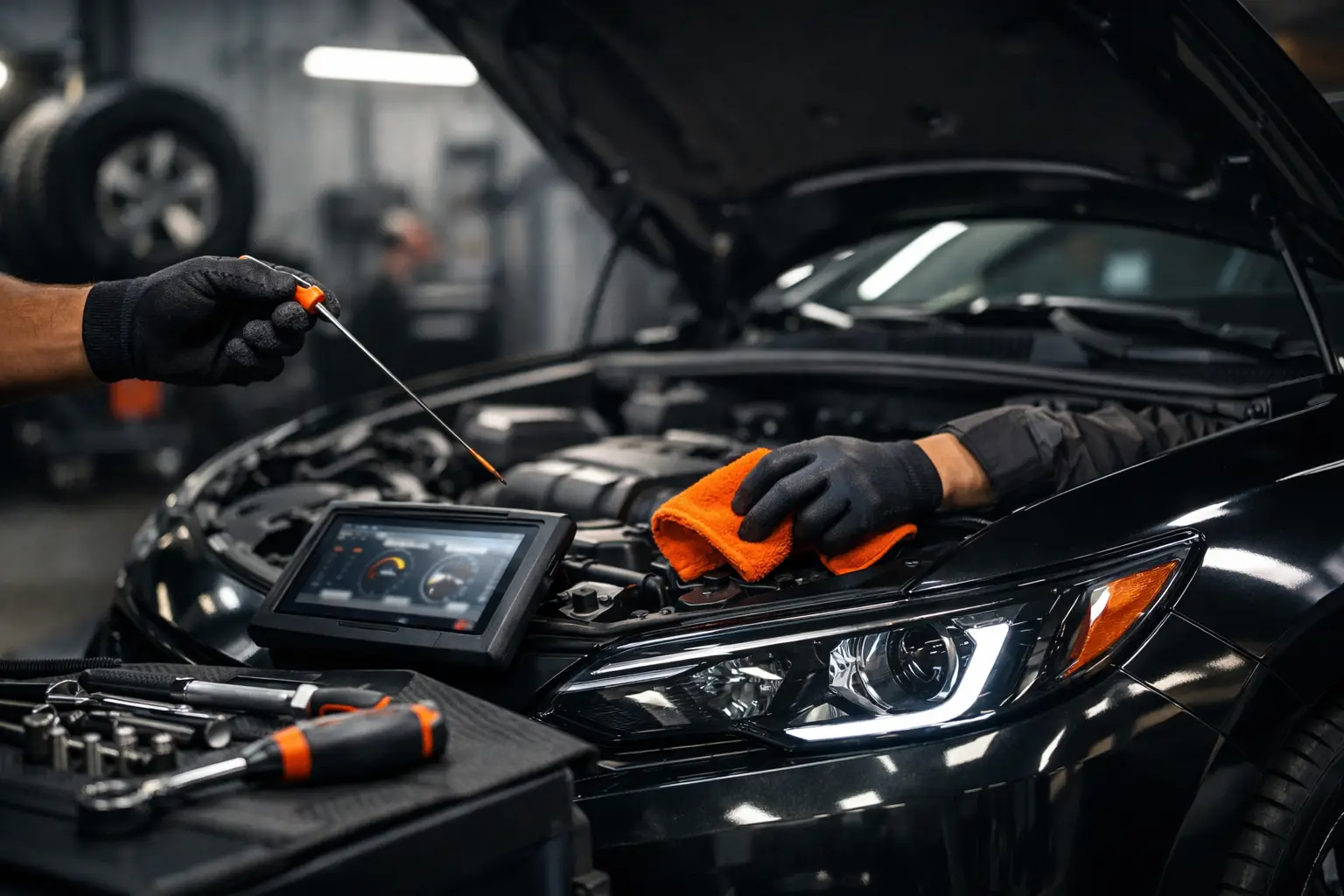
Maintenance records keep unexpected expenses at bay
A forgotten oil change, a belt with no replacement date, or a service completed without keeping the receipt can turn into an expensive problem. A maintenance record is the log that transforms scattered information into straightforward decisions: what was done, when it was done, at what mileage, and how much it cost.
For those who drive their car only on weekends, this control avoids surprises and helps preserve the vehicle. For those working in deliveries, ride-sharing or field service, it also shows how much maintenance weighs on operations. In a small fleet, it allows everyone to follow the same care standard, without relying on any one person's memory.
What a maintenance record should show
A good record isn't just a list of workshop visits. It needs to tell your vehicle's maintenance story clearly. When you look at the screen, you should be able to see the last service performed, identify the next care needed, and find old expenses without searching through papers, messages or bank statements.
For each service, record the date, mileage, services performed, parts and products used, amount paid, and service location. It's also worth including practical notes, such as the oil brand, tire model, part warranty, or a noise the mechanic recommended monitoring.
These details make a difference over time. Knowing that brake pads were replaced a few months ago prevents premature replacement. Having the exact mileage of the last brake fluid change helps you follow the correct maintenance schedule. And comparing costs between services shows whether a seemingly simple maintenance task is becoming more expensive than it should be.
Why keeping just receipts isn't enough
Invoices and receipts are useful, but they don't simplify your routine on their own. They can get lost, become illegible, or end up stored in different places. Even when organized in a folder, finding specific information usually takes time: what was the mileage when the tires were installed? How much was spent on the last full service? Is the battery still under warranty?
A digital record organizes these answers in one place. Instead of keeping a photo of a receipt without context, you link the document to the vehicle, date, mileage and service type. This makes the record truly useful when a question comes up at the workshop, before a trip, or during a vehicle sale negotiation.
There's also a difference between recording the past and using the past to plan the future. If you know when an item was serviced, you can set reminders by time or mileage. That way, maintenance stops depending on remembering everything and becomes part of a predictable routine.
How to build a reliable maintenance record
The best time to start is now, even if there are gaps in your history. Recover whatever is available: receipts, photos, workshop messages, manual records and parts purchase proof. Then include the essential information and maintain the habit of updating the record right after each service.
If you don't know the exact date or mileage of an old service, record an estimate and make that clear in the notes. It's better to have data flagged as approximate than to assume incorrect information. For critical items like timing belts, tires, brakes and fluids, it's worth confirming the situation with a trusted workshop before setting the next service interval.
To keep the record useful, each entry should answer five questions: what was done, why it was done, when it happened, at what mileage, and how much it cost. When replacing a part, also note the brand and warranty. This is especially helpful for batteries, shock absorbers, tires and components that may fail sooner than expected.
A vehicle management app like Mine Garage helps centralize this information on your phone and online. The goal isn't to create another administrative task, but to reduce the work of searching for data when you need it.
Record both preventive and corrective maintenance
Don't log only major services. Oil changes, tire rotation, filter replacements and air conditioning service are preventive items that help prevent breakdowns and larger expenses. A suspension repair, sensor replacement or cooling system fix should be logged as corrective maintenance.
Separating these two types of spending reveals important patterns. If the vehicle receives preventive maintenance on schedule but still requires many unexpected repairs, it may be time to investigate usage, part quality or workshop choice. For professional drivers, this analysis also helps calculate the real cost of keeping the vehicle on the road.
Use mileage and time together
Some maintenance depends more on distance traveled. Others are time-based, even when the vehicle runs infrequently. Oil can degrade in short, frequent trips; brake fluid and coolant also have recommended time intervals.
That's why relying only on mileage may not be enough. The ideal approach is to record both and follow whichever comes first, according to the manufacturer's manual and your driving conditions. A car facing heavy traffic, rough roads, frequent loads or high heat may need service before the light-use interval recommended in the manual.
Maintenance records for professional drivers
For a ride-share driver, delivery person or service provider, maintenance isn't just a household expense. It's an operating cost. A day with the vehicle down due to a preventable failure means fewer rides, fewer deliveries and possible loss of customers.
By logging services, fuel, tolls, washes, insurance and repairs, it becomes easier to see the cost per mile and vehicle profitability. This insight helps you decide, for example, whether it's worth advancing tire replacement, finding a new workshop or setting aside some earnings for the next scheduled service.
Record-keeping also makes it easier to separate personal expenses from work expenses. This keeps the analysis honest and prevents the false sense that the vehicle is profitable when recurring costs are actually being ignored.
How records help with resale and fleet management
A well-maintained vehicle is worth more when the maintenance can be proven. An organized record builds confidence with a potential buyer, showing that services were tracked and important parts weren't replaced without documentation. This doesn't guarantee a higher price in every situation, since overall condition, market and model also matter, but it reduces questions during negotiation.
In a small fleet, the benefits go beyond resale value. Centralizing records allows you to compare similar vehicles, identify those with higher costs and verify that services are being done on time. If one van shows tire wear much higher than others, for example, the record may indicate the need to check alignment, load, route or driving habits.
Sharing information also reduces communication failures. Drivers can log alerts or expenses while managers track the situation and decide next steps. Everyone works with the same information, without relying on outdated spreadsheets or lost messages.
Turn records into better decisions
The value of a maintenance record appears when you need to act. Before approving a quote, check the last similar service. Before a trip, verify items nearing service intervals. Before buying a used vehicle, look for evidence of consistent maintenance, not just promises that "everything's taken care of".
There's no single ideal service interval for all vehicles. The manual, model, age, mileage and driving habits all change the intervals. Still, having organized information puts you in a better position to ask questions, compare recommendations and make decisions with greater confidence.
Start with your next service. A simple, complete and current record today can prevent a question, an unexpected expense, or a vehicle breakdown tomorrow.