Preventive Maintenance Guide for Your Vehicle
A warning light appears on the dashboard, your car starts making an unusual noise, or your motorcycle won't start just when you need it most. These situations rarely happen without warning. The problem is that in the rush of daily life, many warning signs and deadlines get forgotten. This preventive maintenance guide shows you how to build a simple routine to care for your vehicle, avoid unexpected breakdowns, and track what you actually spend to keep it running.
Preventive maintenance isn't about servicing early for no reason. It's about monitoring usage, respecting recommended intervals, and taking action before wear and tear becomes an expensive failure. For anyone using their vehicle for work, this also protects your income: a day lost to a breakdown can cost more than the overdue service.
What preventive maintenance really means
Preventive maintenance is a set of inspections, fluid changes, and adjustments performed at planned intervals. It includes predictable items like oil, filters, tires, and brakes, but also ongoing observation of components that wear with time, mileage, and your driving habits.
Your vehicle's owner manual should be your main reference. It gives you service intervals in both kilometers and time, because a vehicle that runs very little still needs attention. Oil, for instance, can lose its properties even if you drive just a few kilometers a year. Battery, fluids, wipers, and tires all age when sitting unused.
At the same time, the manual shouldn't replace common sense. If you drive in heavy traffic daily, carry loads, drive on poor roads, or do delivery work, you may need to move some checks up sooner. A lightly used vehicle that's well stored and sees few trips can follow the time intervals more comfortably. The right routine depends on your actual driving situation.
Preventive maintenance guide: start with your service history
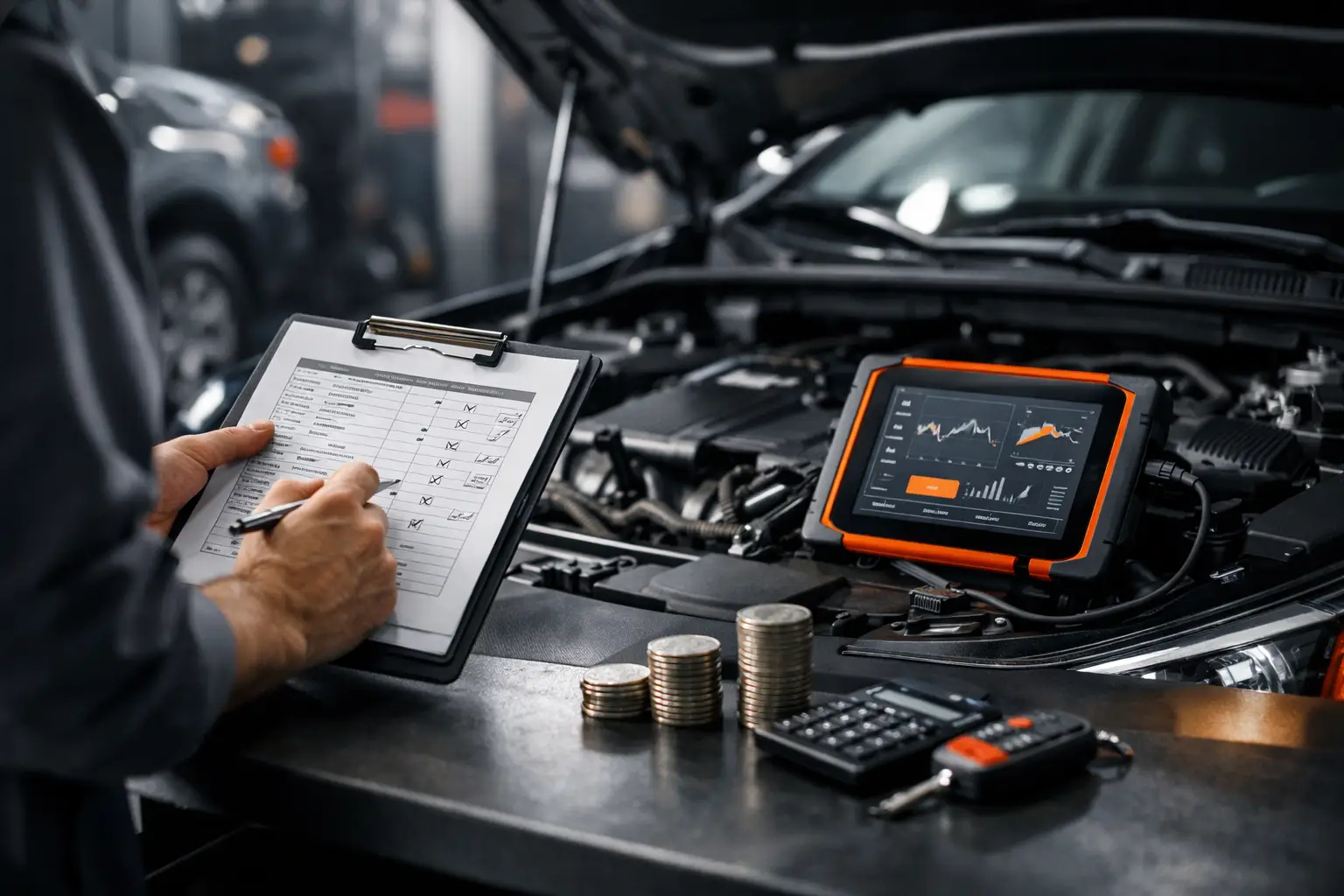
Without a service history, each appointment becomes an attempt to remember what was done and when. Loose receipts, conversations with mechanics, and phone notes don't help much when it's time to sell the vehicle, diagnose a recurring problem, or calculate expenses.
Start by recording the current mileage, the date of your last service, and the services you can confirm. Don't try to reconstruct every detail of the past if you don't have the data. What matters most is creating a reliable starting point from today forward.
For each service, note the date, mileage, amount paid, workshop, parts used, and any relevant observations. If brake pads were replaced sooner than expected, for example, this record can help you spot a driving pattern, a problem with the braking system, or lower-quality parts.
A vehicle management app like Mine Garage brings all this information together in a single history. Instead of searching through invoices or relying on memory, you can check services, expenses, fuel fill-ups, and upcoming reminders all in one place.
Set reminders by date and mileage
You need both types of reminder. An oil change might be due at 10,000 km or 12 months, for example. If you hit the mileage first, do the service. If you drive very little, respect the time limit.
Create reminders for items that need regular attention: engine oil and filter, air filter, cabin filter, fluids, brakes, tires, wheel alignment, balancing, battery, and general service. Not all will have the same frequency, and there's no universal service schedule. The goal is to customize alerts based on your owner manual and how you actually use the vehicle.
What to check between services
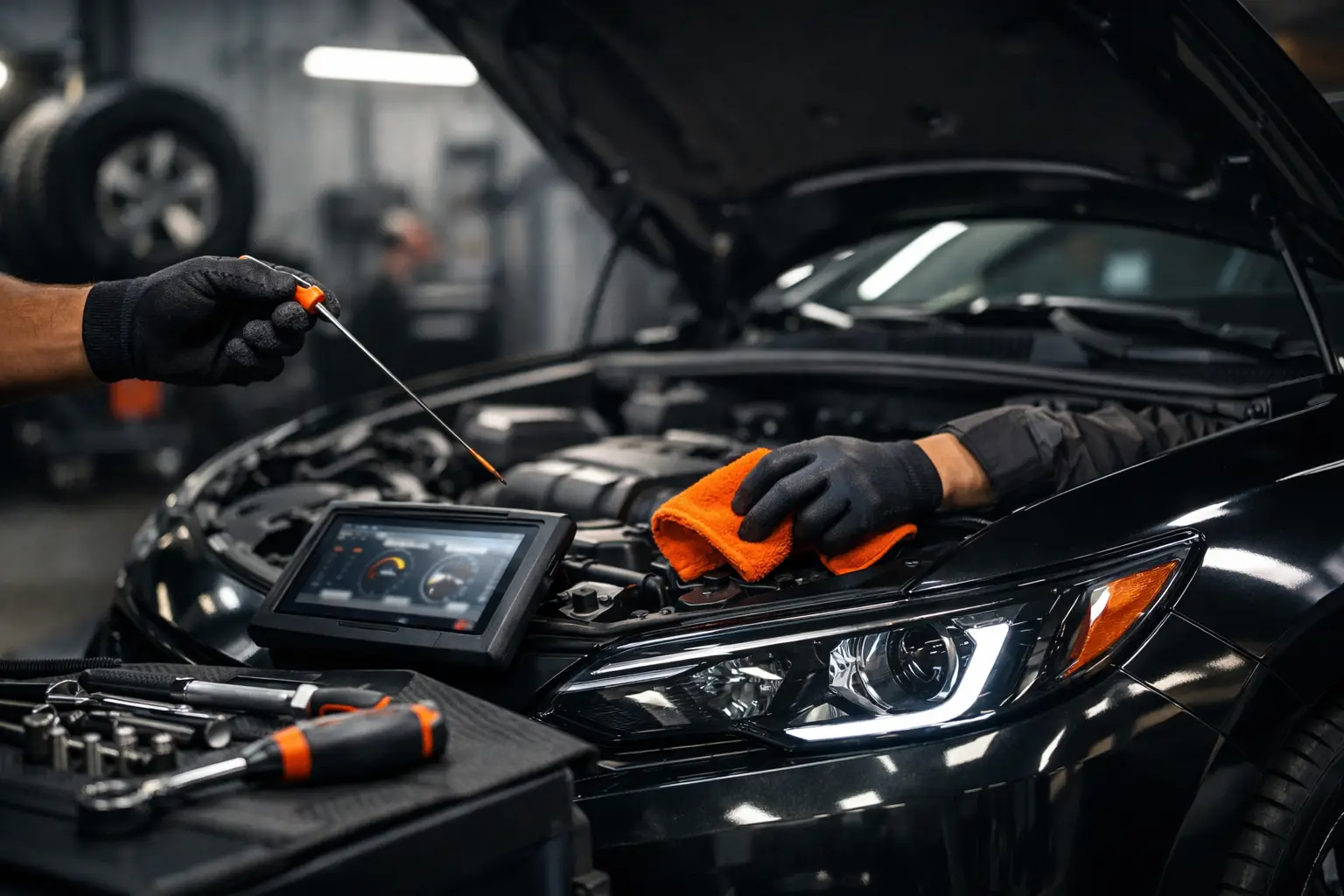
The workshop shouldn't be the only time you look at your vehicle. A few quick checks reduce the risk of discovering a problem only when it becomes urgent. Spend a few minutes each month, or before a long trip, to inspect:
- oil level and signs of possible leaks;
- tire pressure, wear, and visible damage;
- headlights, turn signals, tail lights, and brake lights;
- wiper blade condition and washer fluid level;
- any unusual noises, vibrations, fuel smells, or changes in how the vehicle handles.
You don't need to be a mechanic to notice changes. A steering wheel vibrating at speed, a different brake feel, a slower start, or a sudden increase in fuel consumption are signs worth recording and having checked. The sooner you tell your mechanic about symptoms, the better the chances of avoiding unnecessary repairs and lengthy diagnostics.
For motorcycles, also include chain lubrication and adjustment, cable condition, tire pressure, and brake function. For vans, pickup trucks, and work vehicles, also watch suspension, load being carried, and uneven tire wear. These vehicles typically operate under harsher conditions and can't rely on yearly service alone.
Preventive maintenance is also cost control
Taking care of your vehicle doesn't mean spending money without reason. The goal is to understand where your money is going and make decisions based on information. By recording each service, you spot whether costs are on track, identify repeated repairs, and compare different driving periods.
Fuel consumption is part of this picture. A car suddenly burning more fuel might have underinflated tires, clogged filters, ignition problems, or simply a change in your route and traffic. Without recording fill-ups, mileage, and services, it's hard to separate normal variation from a warning sign.
For rideshare drivers, couriers, and service providers, the accounting needs to go beyond maintenance. Add fuel, tolls, insurance, washes, parking, loan payments, and repairs. Then compare it to what your vehicle earns. This overview shows your cost per kilometer and helps you see whether a route, job, or vehicle is still profitable.
For small fleets, centralizing records prevents each driver from having a different version of the history. The manager can track pending services, costs per vehicle, and issues reported by drivers. Sharing maintenance management doesn't remove the driver's responsibility but reduces communication failures.
How to handle warning lights and unexpected repairs
Prevention reduces risk but doesn't eliminate surprises. A tire can blow out, a battery can fail before its time, and an electronic part can malfunction without clear warning. The difference is that an organized history helps you respond better.
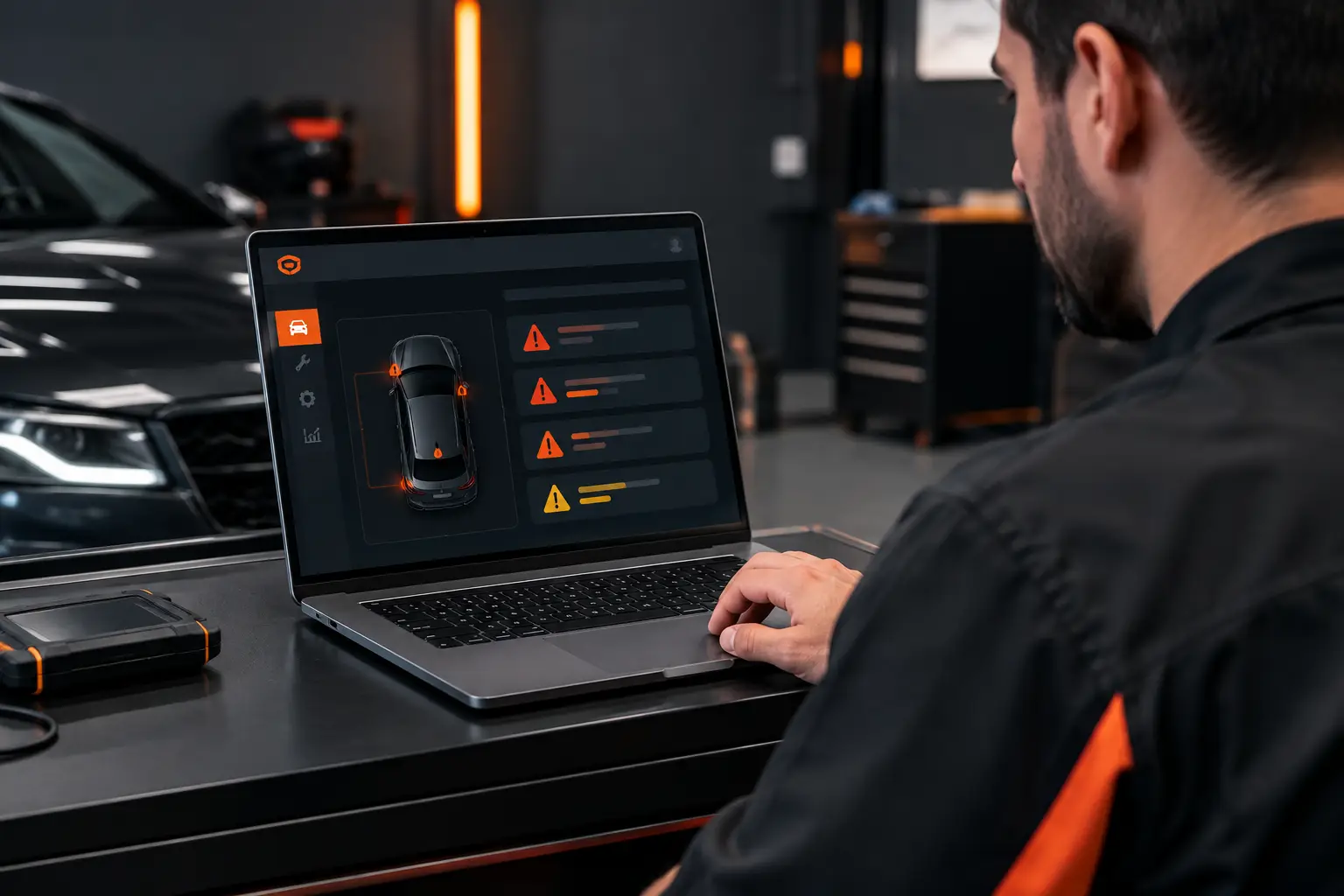
When a warning light appears, record when it came on, the mileage, and any change you noticed. Don't dismiss the warning without investigating. In some cases, an OBD2 reader can show fault codes and guide your conversation with the mechanic. It's useful for understanding what needs checking, but it's no substitute for professional diagnosis.
It's also worth getting a detailed estimate for major repairs. Compare not just the final cost but the source of parts, warranty offered, and reason for replacement. The cheapest option might cost you more if it needs rework soon. On the other hand, replacing parts without diagnosis wastes money too.
Mistakes that make maintenance more expensive
The first mistake is waiting for your vehicle to break down before acting. The second is doing the service but not recording it, losing track of when the next one is due. Another bad habit is accepting generic service intervals without considering your manual, mileage, and driving conditions.
Also avoid putting off small symptoms because the vehicle still runs. A slight noise, a vibration, or a minor loss of power can have simple causes at first. When ignored, they can damage other parts and increase the bill. Preventive maintenance works best as an ongoing routine, not as one big service done only when something fails.
The best time to organize your vehicle's service history is before the next warning light or trip. Record what's been done, schedule the next services, and turn a few minutes of monitoring into more safety, fewer surprises, and better decisions at every kilometer.