OBD2 Error Codes: How to Act Without Guessing
The check engine light comes on and the scanner shows a sequence like P0420 or P0301. OBD2 error codes help turn that warning into a starting point, but they don't automatically tell you which part needs to be replaced. Understanding that difference keeps you from spending money on guesswork, unexpected breakdowns, and the anxiety of driving without knowing what's wrong.
If you use your car every day, rely on your motorcycle for work, or manage a small fleet, diagnosis matters most when it becomes organized action: identify the fault, assess how urgent it is, record what happened, and follow up on the repair results.
What OBD2 error codes really tell you
OBD2 stands for the onboard diagnostic system found in most vehicles sold in Brazil since the 2000s. It monitors components and systems connected to the engine, emissions, and depending on the vehicle, other electronic areas. When the control unit detects a reading outside normal range or a recurring fault, it stores a diagnostic trouble code, also called a DTC.
A code is not a final verdict. It tells you which circuit, system, or condition caught the control unit's attention. For example, a code related to fuel mixture can be caused by unintended air entry, a sensor giving an incorrect reading, inadequate fuel pressure, or even an ignition problem that affects combustion. Replacing the sensor without investigating the whole system might clear the symptom briefly or not fix anything.
The first letter already gives you a clue about the area involved. Codes starting with P relate to the powertrain, including the engine and transmission. B points to the body, C to the chassis, and U to communication between electronic modules. On simpler scanners, you'll usually find mostly P codes.
The first number matters too. Codes with 0 generally follow broader standardization, while those with 1 may be manufacturer-specific. That's why the description shown by an app or scanner should be treated as a starting point. Correct interpretation depends on the model, year, engine type, and your vehicle's symptoms.
A lit warning light doesn't always mean the same risk
Before you search the meaning of a code, pay attention to how the light behaves. A check engine light that stays on usually means there's a stored fault and your vehicle needs checking soon. Even so, it may continue running normally for a while. That's no reason to ignore the warning, especially if fuel consumption has increased or performance has changed.
A flashing light deserves more attention. In many vehicles, it can signal active combustion failure, a situation that may damage the catalytic converter if the car keeps running. A sharp loss of power, sputtering, strong fuel smell, unusual smoke, overheating, metallic noises, or red alerts on the dashboard all call for you to stop safely and seek professional evaluation.
How urgent it is depends on context. A fuel evaporation code might let you schedule an inspection for the next few days. An ignition failure in a car used for deliveries, on the other hand, could stop your work and raise costs if it grows into bigger damage. The code guides your decision, but the vehicle's signals set the priority.
How to read OBD2 error codes the right way
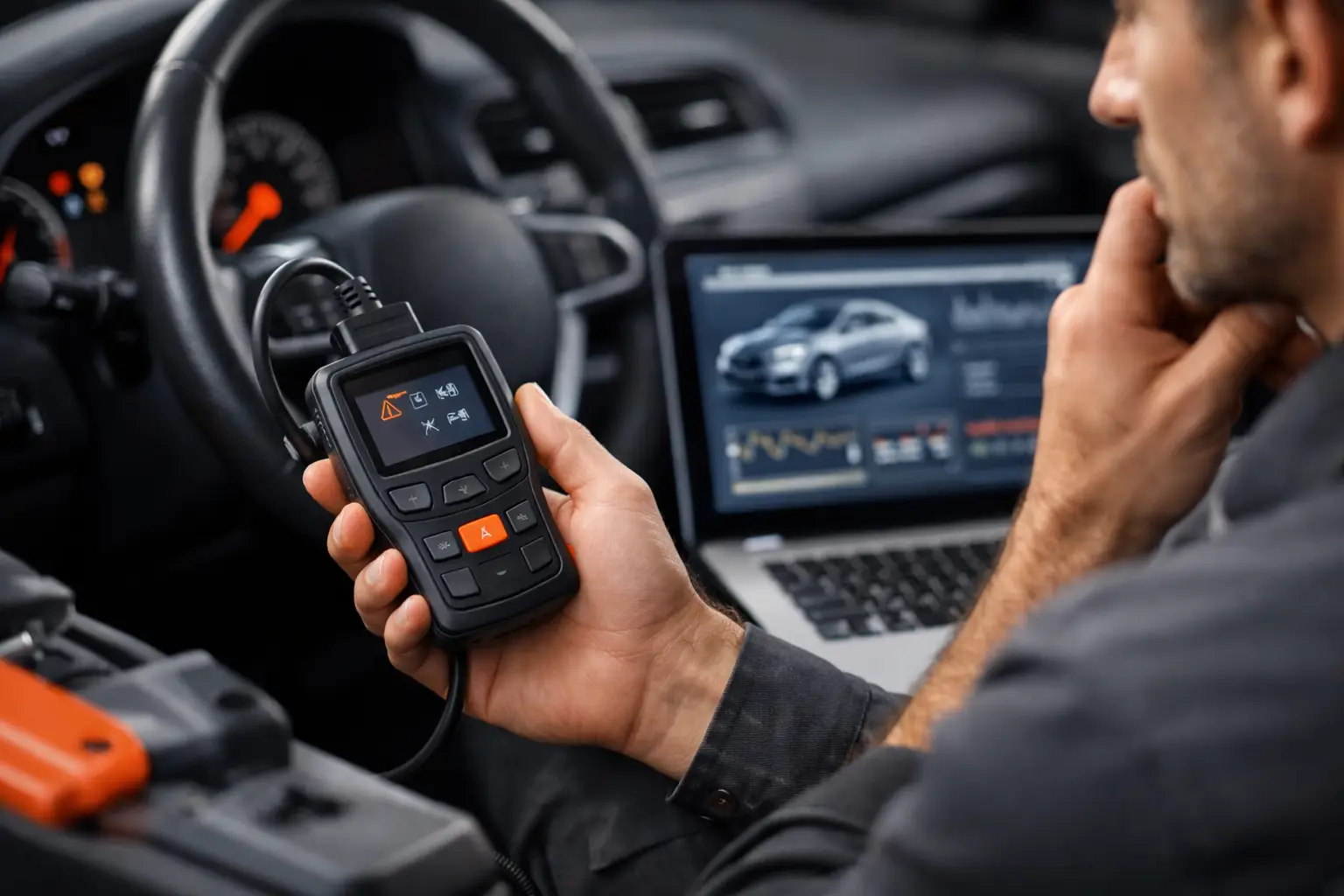
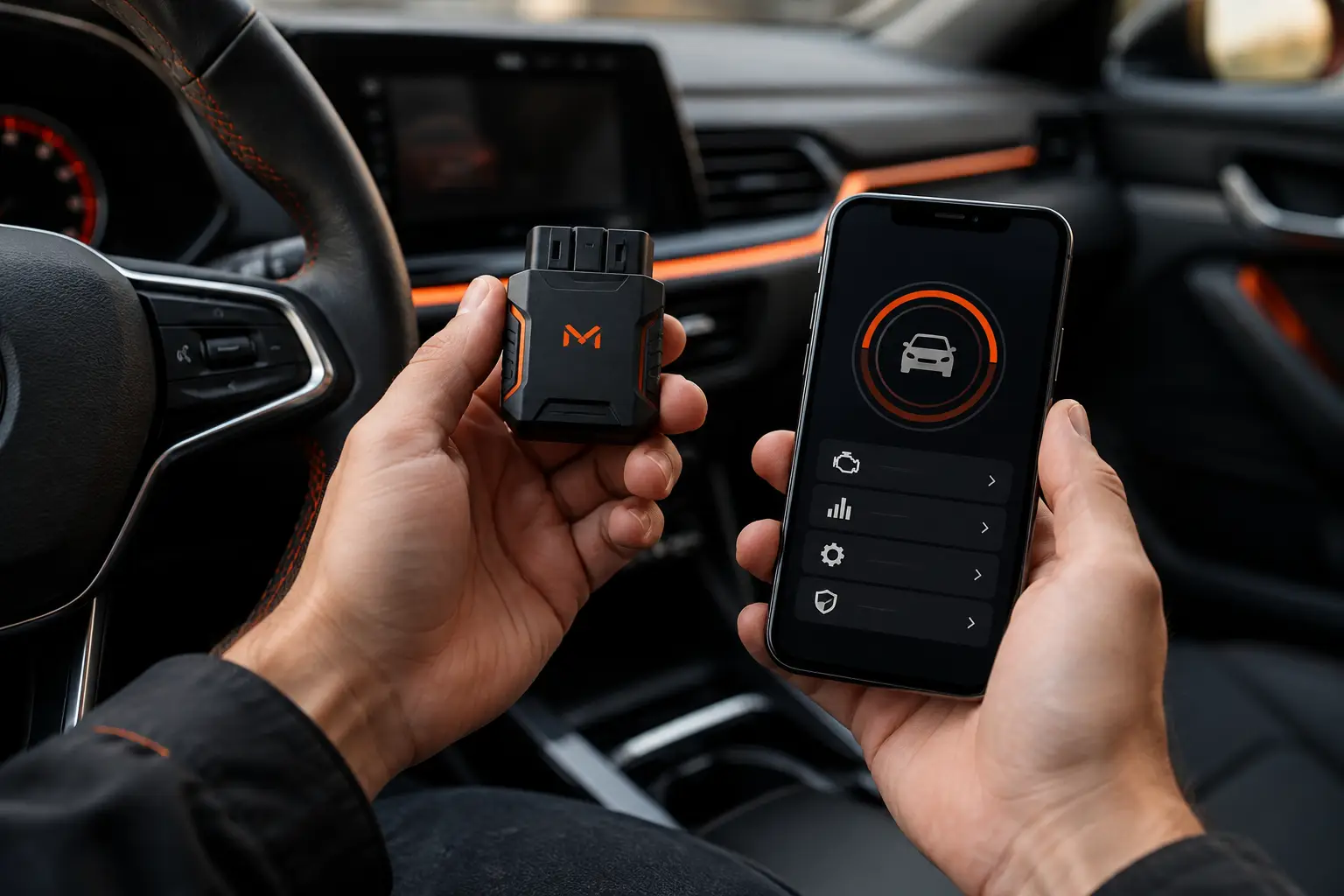
A compatible scanner plugged into the OBD2 port lets you access stored codes. On many cars, this port is below the dashboard near the steering column, but position varies. With a compatible scanner or app, you can read the code identifier and, in some cases, real-time data like engine temperature, RPM, and sensor readings.
When you read a code, don't just copy the number. Record the mileage, date, which light appeared on the dashboard, and the symptoms you noticed. Did the engine only stumble at idle? Did consumption go up after you refueled? Did the light show up right after maintenance? That information helps far more than a code by itself.
It's also worth checking if there's more than one code. A primary fault can trigger secondary codes, and the order they appear in makes a difference. When several errors show up at the same time, a common cause like a weak battery, poor contact, bad grounding, or a corroded connector might explain them all. Instead of assuming multiple components failed at once, look for what they have in common.
The mistake of clearing the code before investigating
Clearing the code may turn the light off temporarily, but it doesn't fix the cause. If the fault stays present, the control unit will likely record the alert again after a few driving cycles. Worse: by clearing the memory too soon, you lose useful data that helps with diagnosis, like the conditions when the fault was detected.
The better path is to read, record, and investigate before clearing. After the repair, clearing the code and monitoring the vehicle makes sense to confirm the fix worked. If the alert comes back, you'll have a clear history of what you've already checked and replaced.
Common codes and what they ask for in practice
Some codes come up often, but they call for careful interpretation. P0300 points to random misfires or misfires in multiple cylinders. P0301, on the other hand, indicates a misfire detected in cylinder 1. Spark plugs, coils, spark plug wires on vehicles that use them, fuel injectors, air intake, and engine compression can all be involved. There's no single solution that works for every case.
P0420 is linked to catalytic converter efficiency below normal. It's known for leading to expensive replacements without enough confirmation. Before you condemn the catalytic converter, you need to check for ignition misfires, exhaust leaks, problems with the oxygen sensors, or oil consumption, because those conditions can cause or simulate the alert.
Codes like P0171 and P0174 usually point to a lean mixture, meaning too much air or not enough fuel relative to what's expected. The cause could range from a hardened hose to a fuel supply pressure issue. Codes linked to engine temperature or the cooling system should never be treated as just an electronic warning. Fluid level, leaks, thermostat, cooling fan, and sensor all need evaluation based on the symptom.
The practical rule is simple: use the code description to ask better questions, not to buy a part right away.
Turn diagnosis into useful history
A dashboard alert is also maintenance information. Recording the code, mileage, service performed, parts used, and cost spent creates a history that makes future decisions easier. If the same fault comes back months later, you can compare what was done, what condition the vehicle was in, and how long the repair lasted.
For professional drivers, that record shows the real impact of faults on operation. A corrective repair costs more than just the shop bill: it can mean days parked, lost rides, delayed deliveries, and extra fuel. For families and private owners, the history cuts your reliance on memory and strengthens your hand when it's time to sell or buy a used vehicle.
In Mine Garage, diagnosis can live alongside maintenance records, expenses, refueling, and mileage. Instead of leaving a screenshot lost in your phone or a loose note somewhere, you keep the context of the alert in the same file for your vehicle. This helps you track patterns and plan your next service with clearer eyes.
When it's worth going to a shop
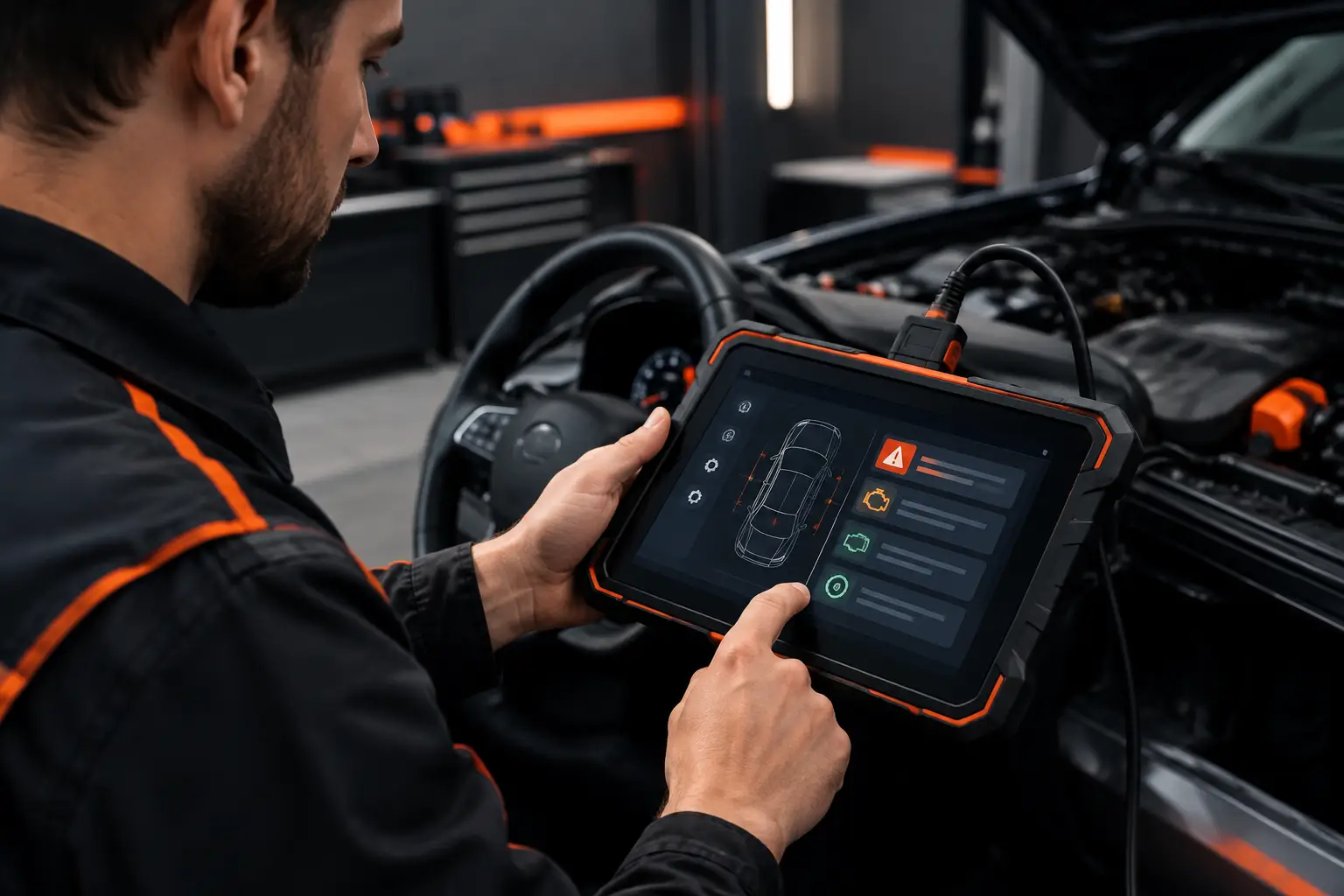
OBD2 scanners are great for understanding what your car is telling you, but they don't replace technical testing. A well-equipped shop can analyze live parameters, test pressure, inspect connectors, check electrical signals, and confirm whether the cause is mechanical, electronic, or fuel-related.
Bring the full code, symptoms, when they started, and any recent service to your evaluation. Saying the light came on after refueling, after a spark plug change, or during a long drive can cut diagnosis time short. If possible, avoid clearing codes before the inspection.
Managing OBD2 error codes isn't about memorizing acronyms. It's about building the habit of acting early, recording well, and deciding based on what your vehicle shows. When the dashboard lights up, treat the warning as a chance to keep a small fault from turning into an expensive breakdown.