7 Main Signs of a Weak Car Battery
A sluggish start right as you head out to work, a flickering dashboard, or a car that won't respond when you turn the key: these are situations nobody wants to face. Recognizing the main signs of a weak battery lets you act before your vehicle gets stuck in the garage, a parking lot, or in the middle of a delivery route.
The battery does more than start your engine. It powers electrical systems when the motor is off and keeps modules, alarms, multimedia, and other components running smoothly. When its charge or capacity drops, your car usually gives you a warning, and ignoring these signs can cost you time, money, and disrupt your routine if you depend on your vehicle for work.
1. Slow cranking or sluggish starter motor
This is one of the most common signs. When you try to start the engine, you notice it turns over more slowly than usual, as if it's struggling before firing up. Sometimes there's just a click or a series of clicks, with no engine turnover at all.
The battery needs to deliver a high discharge in seconds to engage the starter motor. If it's low on charge, aged, or has poor terminal contact, it can't deliver that energy consistently.
It's worth noting the difference between an occasional slow start on a very cold day and a problem that keeps happening. If this becomes routine, don't wait for the vehicle to fail completely before getting it tested.
2. Dim lights, flickering, or a blinking dashboard
Dimmer headlights, weak interior lighting, and a dashboard that goes dark or flickers when you start the car also deserve attention. These symptoms appear because available voltage is below what's needed for electrical systems to work steadily.
Make a simple observation at night: with the car off, turn on the headlights. Then start the engine. A small change is normal, but a sharp drop in brightness or a dashboard restart means it's time to check the battery and charging system.
In newer vehicles, a weak battery can trigger seemingly unrelated warning messages on the dashboard. Alerts for stability control, power steering, sensors, or multimedia may pop up from low voltage, even though those systems aren't actually faulty.
3. Electrical problems appearing without a pattern
Slower power windows, reduced key fob range, multimedia restarting, and alarm malfunctions can all be signs of a weak battery. On their own, each symptom might have a different cause. When several appear together, the battery moves to the top of your suspect list.
This is especially relevant if you use your vehicle on short trips. Starting the engine, running air conditioning, the sound system, charging devices, and lights, then shutting everything down minutes later, may not give the alternator enough time to fully recharge what the starter drew.
For app-based drivers, couriers, and professionals who spend their day using GPS, charging their phone, and making frequent stops, tracking this pattern prevents failure at the worst moment: when your car should be earning you money.
4. Battery warning light on the dashboard
A battery symbol light doesn't necessarily mean your battery needs replacing. In most cars, it signals a charging system problem while the engine is running. The cause could be the alternator, serpentine belt, voltage regulator, wiring, or terminal connections.
Still, this alert shouldn't be ignored. If the light comes on while driving, the battery may be powering all electrical systems on its own until it drains. Depending on your vehicle, this could take anywhere from minutes to hours.
Reduce non-essential equipment use, pull over to a safe spot, and get it checked. Continuing to drive until the car dies can turn a simple inspection into a tow call, delays, and a lost workday.
5. Needing frequent jump starts
Needing a jump more than once is a clear sign something's wrong. A jump-start solves the immediate emergency but doesn't fix the cause. You might have an aging battery, an alternator that isn't charging properly, or excessive electrical draw when the car is off.
Leaving lights on, keeping 12V accessories plugged in, or installing aftermarket equipment without proper setup can drain even a healthy battery. But if it loses charge repeatedly despite normal use, testing is essential.
There's also a practical risk: incorrect jump-starting can damage your electrical system. Check your vehicle manual and use proper cables. With hybrid and electric vehicles, procedures require even more care since they have high-voltage systems beyond the standard 12V battery.
6. Old battery, swollen case, or corroded terminals
Visual inspection can catch problems before they strand you on the road. Look for signs of leaks, a warped cap, a swollen case, and white, blue, or greenish powder buildup on the posts. Corrosion can degrade electrical contact and mimic a dead battery.
Car batteries typically last several years, but there's no set lifespan for all vehicles. Intense heat, heavy traffic, frequent starts, short trips, extra accessories, and long periods of storage reduce their life. So checking only the installation date isn't enough.
If terminals are dirty, clean them with the engine off and follow proper safety procedures. If there's swelling or leaking, don't try to save it: have it replaced professionally and disposed of correctly.
7. Bad smell or strange behavior after recharging
A strong sulfur or rotten egg smell near the battery can mean overheating, leaks, or overcharging. It's a less common symptom, but it demands immediate attention. Shut off the engine, avoid sparks, and seek professional evaluation.
Another issue is when the battery seems fine after a recharge but loses power quickly. This happens when it can no longer hold a charge. A recharge may help if the drain was one-time, like leaving a light on, but it won't restore a battery that's lost capacity from internal wear.
How to confirm the problem is actually the battery
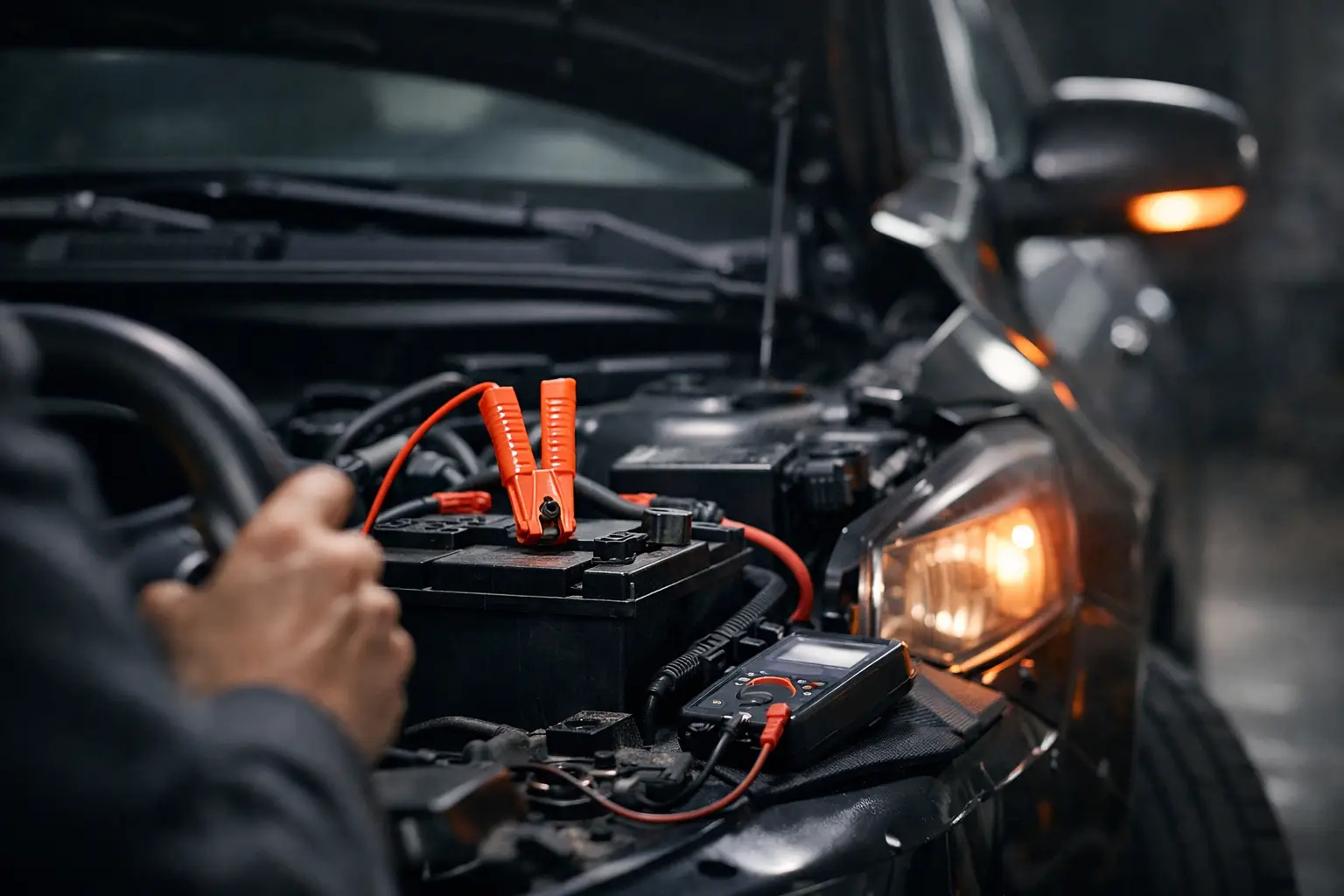
Symptoms point the way, but diagnosis prevents wasted money. A repair shop, auto electrician, or specialty store can measure voltage, cranking capacity, and alternator performance. The best test checks the battery at rest, during starting, and with the engine running.
Generally, a fully charged battery reads around 12.6V with the car off. With the engine running, voltage should rise because the alternator is charging the system. These values vary by vehicle and test conditions, so don't rely on one number alone to decide on replacement.
It's also worth investigating whether there's a parasitic drain. Alarms, trackers, modules, chargers, and aftermarket accessories can draw more power than expected when the car sits idle. For a small fleet, this kind of repeated failure can create costs that are hard to spot without organized records.
What you can do to reduce breakdown risk
The best care combines preventive maintenance with record-keeping. Note the battery installation date, tests performed, jump-starts needed, and any alternator or cable repairs. This way, it's easier to spot when a failure stops being occasional.
Avoid leaving your vehicle idle for weeks without proper care, especially if it has many electronic accessories. When possible, drive routes that allow recharging and confirm that lights, sound systems, and chargers are off when you park. For work vehicles, include engine start and dashboard warnings in a daily checklist.
In Mine Garage, recording services, expenses and vehicle notes helps you keep this history in one place. You can link battery replacement to other costs, track mileage, and stop relying on memory for what's already been done.
A battery rarely fails without warning signs. When you notice changes in starting, lighting, or electrical behavior, log what happened and get it tested early. A few minutes of prevention can save you from a breakdown when you need to get on the road most.