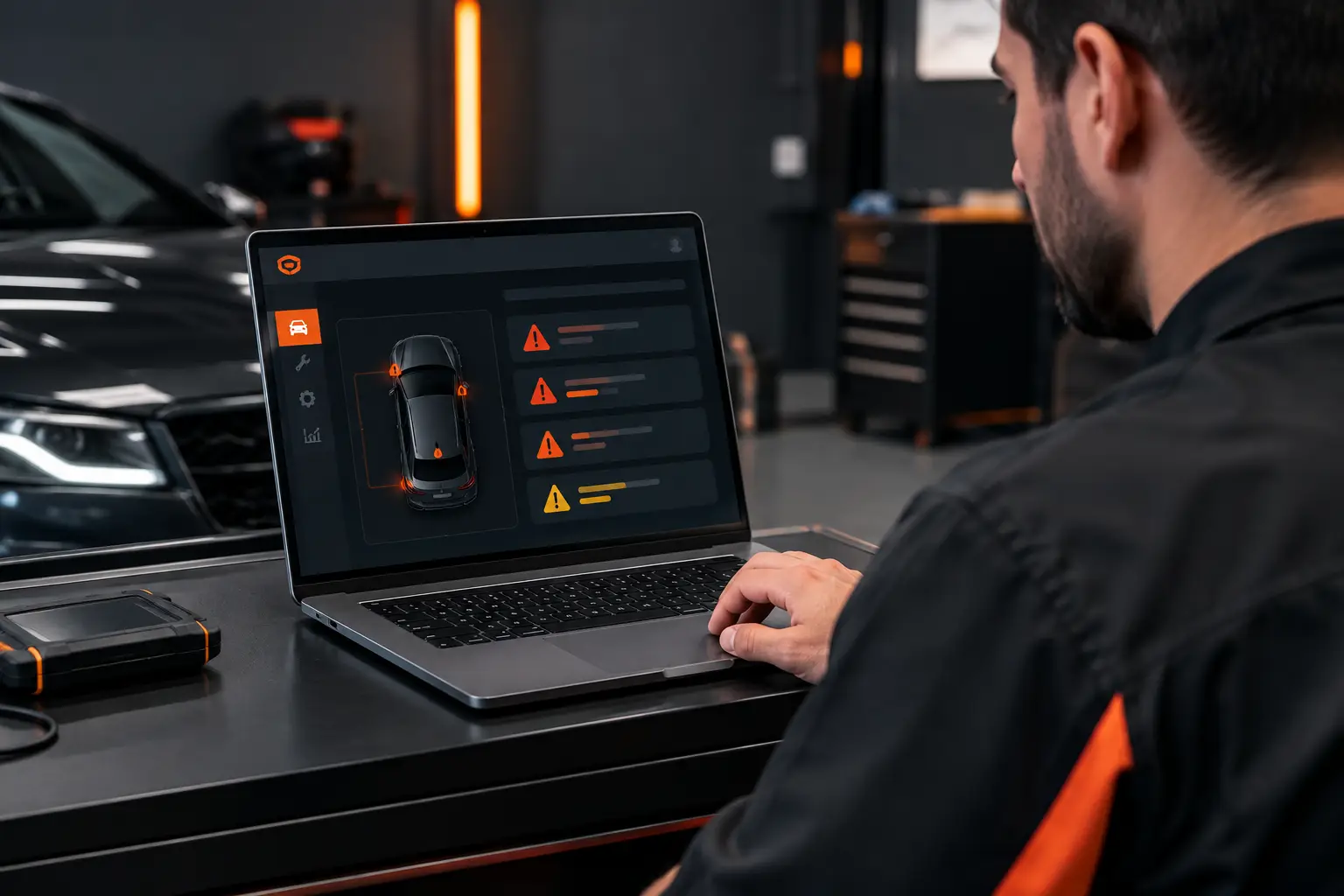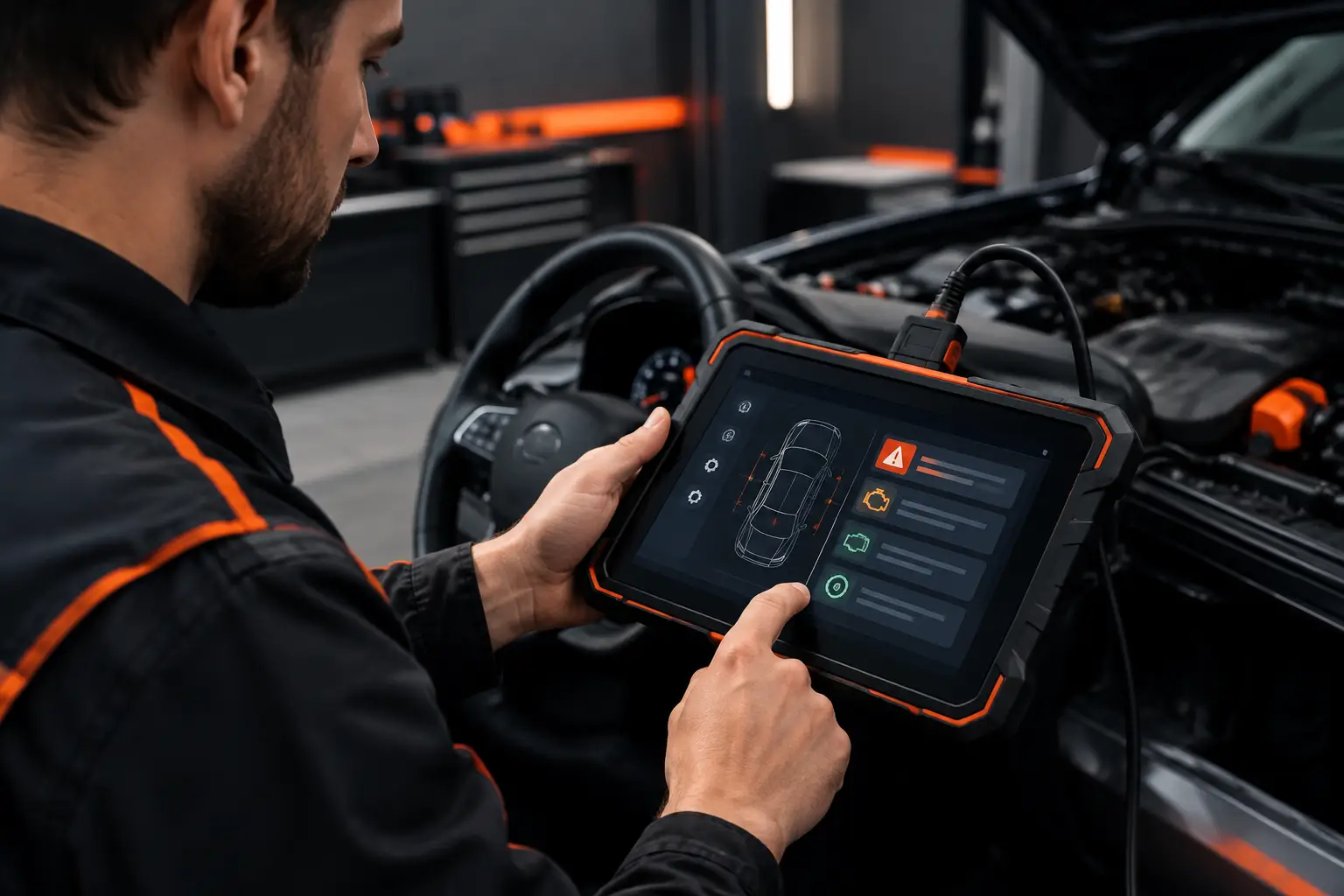
How to Read OBD2 Codes and Decide Your Next Step
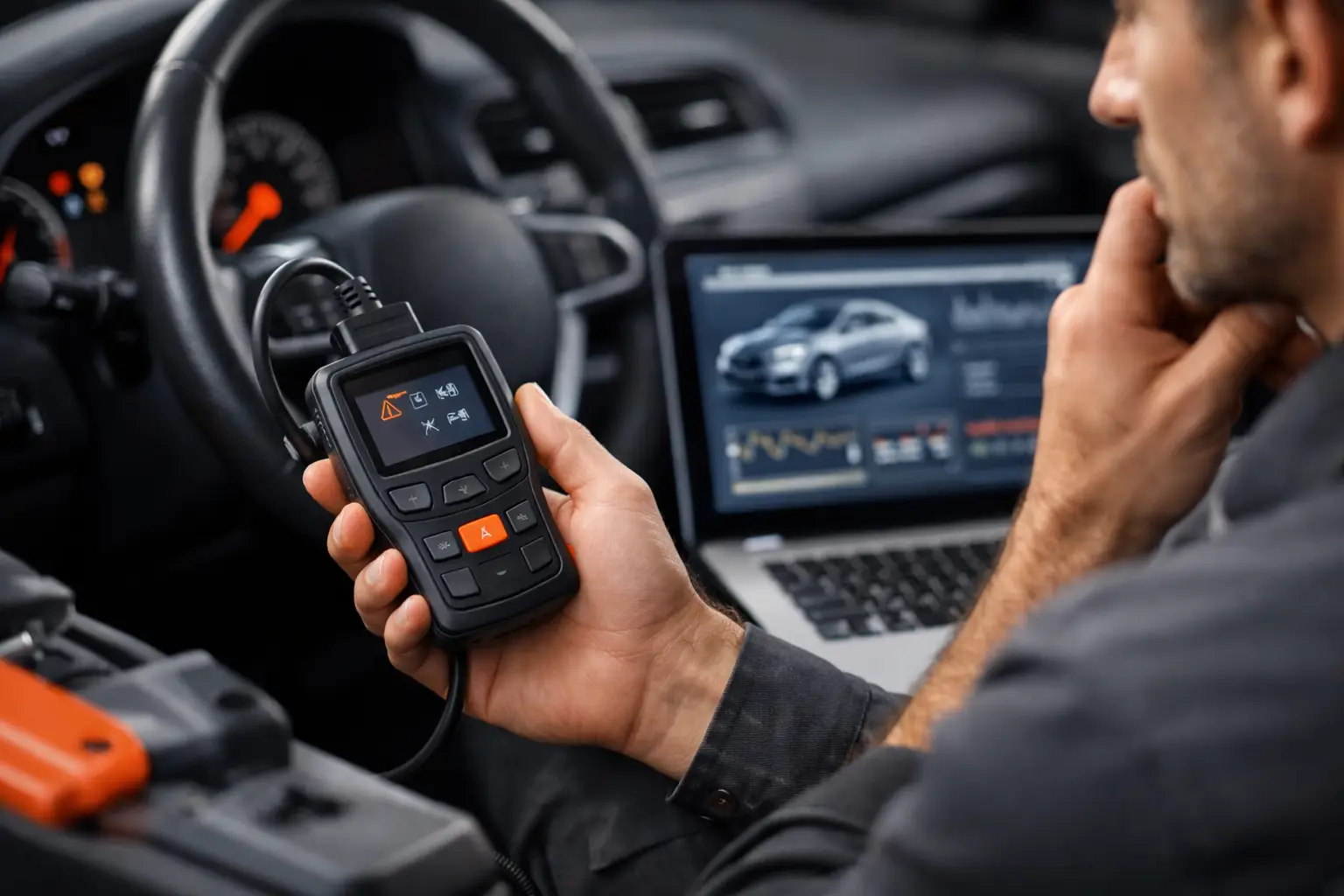
The check engine light comes on before a race, a delivery, or a family trip. A scanner on your phone shows P0301, but the code alone doesn't tell you whether you need to stop the car now or just schedule a checkup. Knowing how to read OBD2 codes helps you turn that warning into a practical decision, without replacing parts by guesswork and without ignoring a signal that could become costly.
OBD2 is the diagnostic system found in most light vehicles sold in Brazil from the 2000s onward. It monitors various electronic components and records faults affecting emissions, engine, transmission, and other systems. A compatible scanner or an adapter connected to an app can access this information through your vehicle's OBD2 port.
Before reading the code, observe how your vehicle is behaving
The dashboard and how the car drives are still your first diagnostic clues. If the check engine light is on continuously, the engine runs normally, and there's no strong fuel smell, excessive smoke, or noticeable power loss, you can usually read the code calmly and plan your next step.
Things change when the light flashes. A flashing check engine light may indicate active combustion misfire, risking catalytic converter damage. Limit vehicle use, avoid hard acceleration, and seek professional evaluation. Also stop if you notice overheating, oil pressure warning, metallic noises, severe engine stumble, or leaks.
The scanner tells you what the module detected. It doesn't replace a physical inspection and doesn't confirm a faulty part on its own. This distinction prevents a common mistake: replacing a sensor, spark plug, or probe just because the component name appears on the screen.
How to read OBD2 codes with a scanner or phone
Find the OBD2 port, usually below the steering wheel near the pedals or the fuse box. On some models, it's behind a cover. With the car parked safely, connect the scanner or adapter. Then turn on the ignition as directed and open the diagnostic function.
The process is usually straightforward: select your vehicle, read the faults, and record the result before erasing anything. Note the code, the description shown, the date, the mileage, and any symptoms you've noticed. A photo of the screen also helps when you talk to a repair shop.
If you use a Bluetooth adapter, check that it's compatible with your car's protocol and your phone. Very cheap adapters may lose connection, show incomplete data, or stay on and drain the battery in some vehicles. For occasional use, a basic reader may work fine. If you drive frequently or manage more than one vehicle, prioritize history, live data, and organized logs.
Not every vehicle provides the same data. Availability depends on the make, year, electronic system, and scanner. Trucks, motorcycles, and older vehicles may use different standards or connectors. Always check compatibility before buying a device.
Understand the structure: P, B, C, and U
An OBD2 code starts with a letter followed by four digits. The letter indicates which vehicle system is being monitored:
- P stands for powertrain, related to engine, transmission, and emissions.
- B refers to body, such as airbags, air conditioning, and comfort modules.
- C involves chassis, including ABS, steering, and electronic suspension.
- U indicates communication faults between electronic modules.
P codes are the most common ones drivers see because they're linked to the check engine light. The first digit after the letter also matters. Zero usually indicates a standardized code with similar meaning across manufacturers. One indicates a manufacturer-specific code, which may require more detailed description to interpret correctly.
For example, P0301 typically means a combustion misfire detected in cylinder 1. But the cause could be a spark plug, ignition coil, fuel injector, air leak, engine compression, or even bad fuel. The code points to where to look, not to an automatic conclusion.
Distinguish between current, pending, and historical codes
When you read codes, check the status of each fault. A current or confirmed code means the module has consistently recognized the fault. It deserves priority, especially if it's accompanied by a dashboard light or symptoms.
A pending code means an abnormal condition was detected but hasn't repeated enough times to trigger the light or become a confirmed fault. Don't ignore it. Record it and monitor whether it returns, in what conditions it appears, and if the vehicle shows changes in fuel consumption, starting, or performance.
There may also be permanent or stored codes. Permanent codes don't simply disappear because you cleared them in the scanner. The system needs to run its tests and confirm the fault hasn't returned. Historical codes, on the other hand, may be records of a problem already fixed.
This contextual reading is especially useful for professional drivers. A pending fault that returns on busy work days, for example, might indicate an intermittent problem worth addressing before it causes downtime.
Use freeze frame data to understand when the fault occurred
Many scanners show freeze frame data. It's a snapshot of your vehicle's conditions at the moment the error was recorded: engine speed, temperature, vehicle speed, load, air intake, and other available data.
If a code appeared with a cold engine, the investigation may follow a different path than a fault that emerged under high load on the highway. A fuel mixture alert, for example, might be tied to a specific operating condition rather than a constant defect.
Live data also helps, but use caution. Sensor readings vary by model and engine operation. If you don't know the expected range, compare trends and bring your records to a professional instead of assuming an isolated number confirms a fault.
What to do after identifying a code
Start with the basics and what directly relates to the symptom. Check if the fuel cap is tight, if any connectors are visibly loose, if oil level and coolant are correct, and if scheduled maintenance is current. Spark plugs, filters, transmission fluid, and component cleaning have different intervals for each vehicle.
Next, assess urgency. Codes related to combustion misfire, temperature, oil pressure, transmission harshness, or brake systems should be addressed quickly. Emissions alerts without noticeable change may allow brief monitoring, but still require diagnosis if they return.
Clearing the code without fixing the cause rarely works. The light may go away for a few miles and come back. Plus, clearing faults before recording data can make the shop's job harder and lose useful information about the conditions when the problem occurred.
If your vehicle is out of warranty and you do small repairs yourself, use the code as a starting point for testing. If it's under warranty, has safety issues, or you rely on the car for income, bring the complete record to a trusted shop. This makes the conversation more direct and helps authorize only necessary services.
Turn diagnostics into maintenance history
An OBD2 code becomes far more useful when it doesn't end on the scanner screen. Record the fault, mileage, symptoms, confirmed diagnosis, service performed, and cost. If the same alert appears months later, you'll know what was done, which parts were used, and whether there's a pattern.
For a family, this history means not relying on someone's memory of the shop visit. For app drivers, delivery workers, and service providers, it helps link maintenance, fuel consumption, and downtime to actual operating costs. For a small fleet, it lets you track recurring issues by vehicle and act before a fault affects your schedule.
In Mine Garage, diagnostics can be part of the same record you use to track services, refueling, expenses, and mileage. That way, an alert stops being just a technical acronym and gains context: when it happened, what it cost to fix, and whether it came back.
Reading OBD2 codes isn't about memorizing thousands of combinations. It's about recording the alert, understanding its priority, and making a decision based on your vehicle's behavior and history. This simple habit helps you take better care of your car, avoid surprises, and arrive at the shop with information that truly makes a difference.