Vehicle maintenance log: track everything that matters
Was the oil changed six months ago or eight? How much fuel did your car use last month? When is the brake service due? A vehicle maintenance log answers these questions before they turn into an unexpected bill, overdue maintenance, or hours spent hunting for old receipts.
It's more than a list of services. When used consistently, it transforms scattered information about maintenance, fill-ups, expenses and mileage into a useful history for taking better care of your vehicle and understanding what it truly costs to run. For those who work driving or manage multiple vehicles, this record also shows whether the operation is performing well.
What is a vehicle maintenance log
A vehicle maintenance log is the continuous record of your vehicle's life. You note what happened, when it happened, the mileage, the amount paid and, when relevant, where the service was performed. It can include everything from a routine fill-up to a tire change, a traffic fine, insurance, a bulb replacement, or a fault flagged by an OBD2 scan.
The goal isn't to add paperwork to your routine. It's to avoid relying on memory. Memory tends to fail exactly when you need it most: when you need to know if a mechanic recommended replacing a part earlier than scheduled, compare spending between months, or negotiate selling the vehicle.
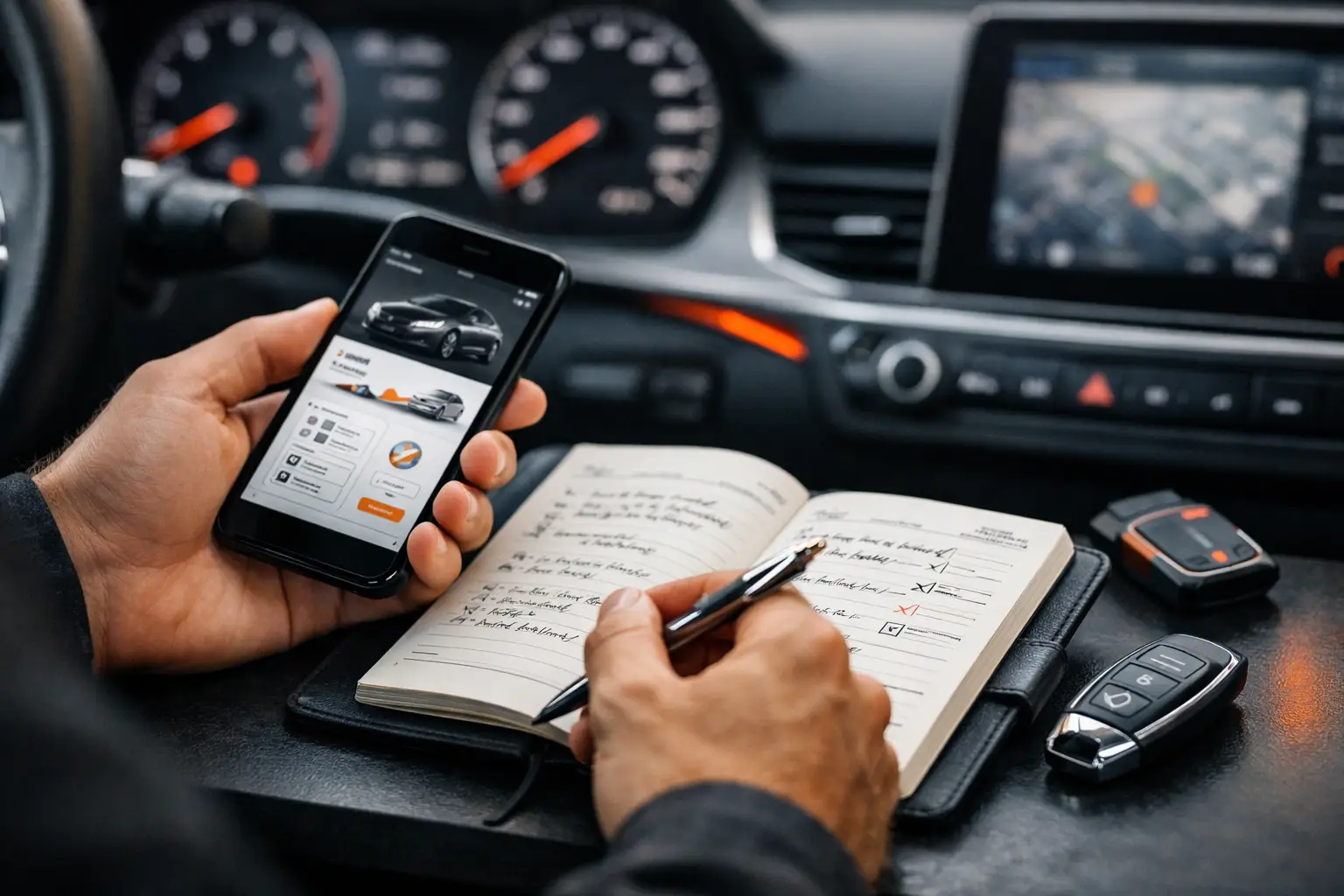
A notebook can work for a single car and a simple routine. But it has clear limitations: receipts get lost, bills don't add themselves up, and reminders don't pop up on your phone. An app centralizes the history, makes recording easier, and lets you look up any piece of information in seconds.
Why logging everything changes how you manage your vehicle
Many car expenses seem small when looked at in isolation. A fill-up, parking, a wash, or new wiper blades rarely stand out. Added up over months, they reveal the true cost of keeping your vehicle running.
The same applies to preventive maintenance. Changing oil on schedule, monitoring tire condition, and servicing the braking system is usually more predictable and cheaper than dealing with a failure caused by neglect. The log doesn't prevent surprises, but it reduces the risk of forgetting items that depend on time or mileage intervals.
There's also a real benefit when you decide to sell. A vehicle with organized history shows care. Having dates, mileages and service records makes it easier to answer a buyer's questions and helps you justify a fair price. It doesn't replace an inspection, but it makes the vehicle's history more transparent.
Maintenance stops being a surprise
Each service should be recorded with the date, mileage, cost, and a brief note about what was done. Instead of just writing "service," record "oil and filter change," "alignment and balancing" or "front pads replaced." This level of detail makes a difference at your next mechanic visit.
Reminders should follow the manufacturer's recommendation and your driving pattern. A car that sits idle much may need attention based on time elapsed. A delivery motorcycle or service van may quickly hit mileage limits. There's no universal interval that works for all vehicles.
Fuel records show consumption and driving habits
Recording each fill-up with date, odometer reading, litres, price per litre, and total cost lets you track average consumption. A persistent change in this number can point to underinflated tires, overloading, heavier traffic, a route change, or a mechanical issue worth investigating.
A single fill-up isn't enough to draw conclusions. Different stations, how you top off the tank, and short trips can skew the picture. The real value comes from a series of records. After a few weeks, you start to see patterns without needing spreadsheets.
Expenses reveal your true cost of ownership
Fuel is only part of the bill. Insurance, registration, licensing, parking, tolls, washes, parts, tires and servicing all contribute to the cost of ownership. To organize well, separate recurring expenses from one-off costs and use consistent categories.
This separation helps answer practical questions. Is it worth keeping this vehicle? How much should you set aside each month for annual costs? Has maintenance spending spiked or become a trend? For a family, these answers inform the budget. For someone who works with a vehicle, they directly affect profitability.
How to create a vehicle log you'll actually use
The best system is one that fits your routine. If recording an expense takes too many steps, you'll put it off and likely forget it. The practical rule is simple: make the entry when the event happens, or set aside a few minutes on a fixed day each week to get everything up to date.
Start by entering the vehicle's basic details: model, year, registration plate, fuel type, and current mileage. Then add the most recent service date for each relevant item. If you don't know the exact date of past maintenance, record an estimate and confirm at your next mechanic visit. It's better to start with incomplete information than to delay indefinitely.
After that, keep four groups of records updated:
- maintenance and repairs, including parts and labour;
- fill-ups, mileage and consumption;
- administrative and usage expenses, such as insurance, taxes and tolls;
- documents, receipts and notes on important events.
Taking a photo of the receipt or quote is a simple step that prevents paper clutter. It also helps you check warranty details, identify a part code, and recall the details of a service from months earlier.
Use mileage as your common reference point
Mileage connects much of your vehicle's history. It shows when a service was done, helps you calculate consumption, and indicates when scheduled maintenance is due. This is why you should update the odometer often, especially after fill-ups or servicing.
For vehicles that don't get driven much, don't rely on the dashboard number alone. Fluids, batteries, seals and tires age with time and use. Your log should combine alerts based on both mileage and date to avoid gaps.
A vehicle log for every type of driver
For personal vehicle owners, the focus is usually on avoiding forgotten tasks and keeping costs visible. Reminders for oil, tires, insurance and registration already lift much of the burden from your daily routine. A centralized history is also useful when multiple family members share the same car.
For ride-share drivers, couriers, taxi drivers and service providers, tracking needs to go beyond expenses. Recording income by period and comparing it to fuel, tolls, maintenance and other costs shows what you actually keep. Revenue isn't profit. A day with many trips might seem great until operating costs are factored in.
For small fleets, the key is shared organization. Each vehicle needs its own history, while managers can track maintenance due dates, expenses and pending tasks in one place. Daily checklists help record tire condition, lights, fluid levels and damage before a minor issue becomes an unplanned breakdown.
This is where a platform like Mine Garage makes sense: it brings together maintenance, fuel, expenses, history, reminders, checklists and shared access by vehicle in one record. The benefit isn't just having more data: it's finding the right information when you need it.
Mistakes that weaken your control
The most common error is logging only major expenses. An engine swap and new tires go in the record, but fill-ups, small repairs and regular costs get left out. The result is an incomplete picture of monthly spending.
Another problem is creating too many categories. If every cost gets its own classification, comparing periods becomes confusing. Start with simple categories and expand only when a distinction truly helps with decision-making.
Finally, don't use the history just to file away the past. Review the data regularly. Watch for changes in consumption, repeated maintenance, rising cost per kilometre, or an upcoming major service. The value of the log is in guiding your next move.
Your vehicle generates information every day. By recording it simply and consistently, you stop chasing deadlines and expenses and start driving with greater predictability, control and peace of mind.