How to Record Fuel Fill-ups Without Mistakes
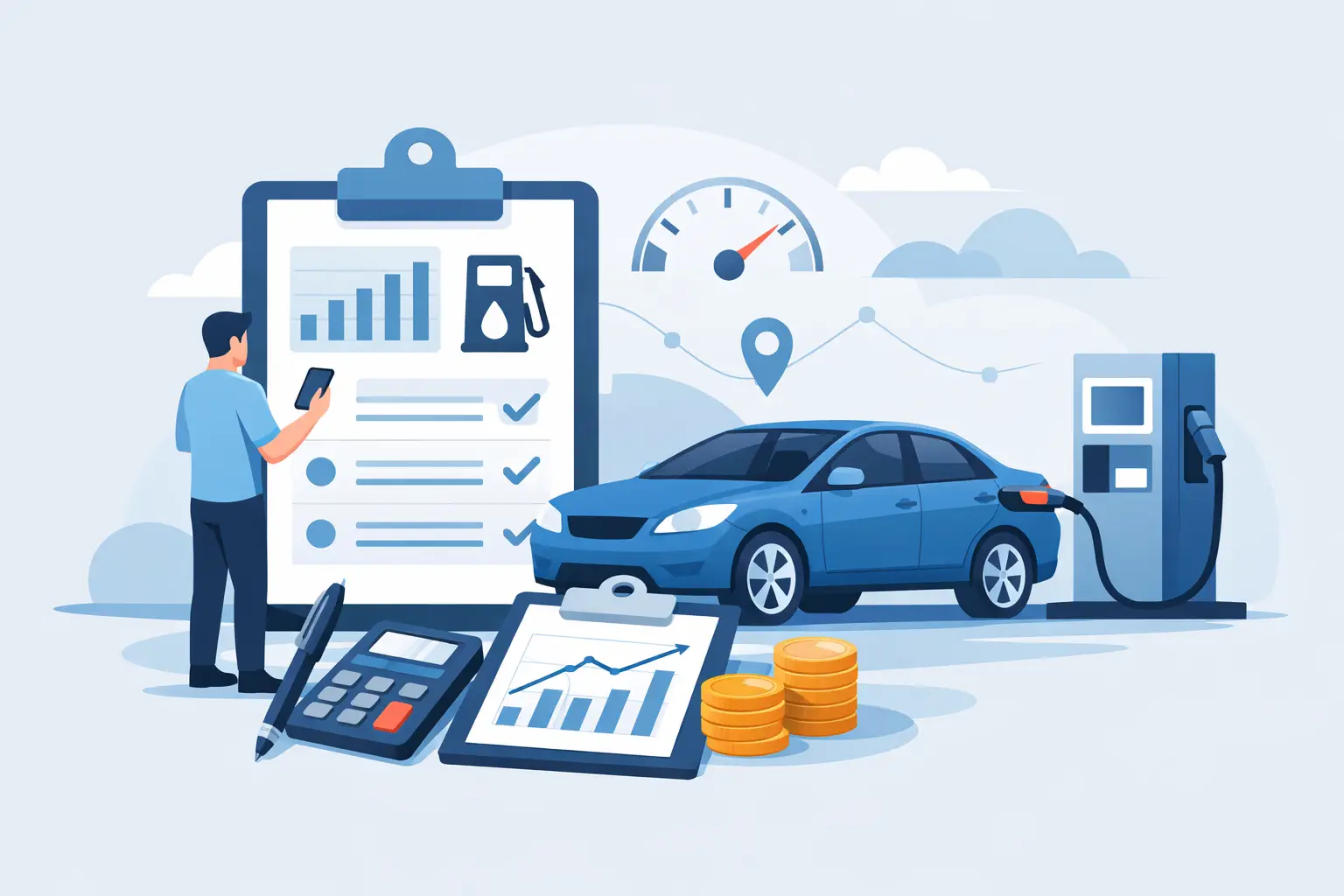
You fill up, toss the receipt in the glove compartment and promise to log the expense later. Two weeks pass, the paper vanishes and the real cost of your car becomes a guess. Knowing how to record fuel fill-ups changes that: every stop at the pump starts showing you how much you consume, what you pay per kilometer and whether your costs are rising for no good reason.
For those who drive only their daily commute, this habit helps plan your budget. For rideshare drivers, couriers and service providers, it's even more direct: fuel is an operating cost and needs to be measured against your income. The right record doesn't require complex spreadsheets or technical knowledge. It just needs consistency and a few well-chosen data points.
What to write down at each fill-up
A useful entry starts with the date and which vehicle you're filling up. Next, record the odometer reading from your dashboard, the fuel type, the amount in liters and the total amount paid. With this information alone, you can already track expenses and calculate indicators that matter for your daily driving.
If the station shows the price per liter, include that too. It makes comparing between regions, days of the week and different fuels easier. When available, it's worth saving a photo or copy of the receipt, especially if that expense needs to go into an expense report or professional tracking system.
The odometer reading is the part you can't skip. Without it, you know what you spent, but you don't understand how far you drove to generate that cost. By recording the mileage at each fill-up, your history shows the distance between stops and lets you calculate fuel economy more reliably.
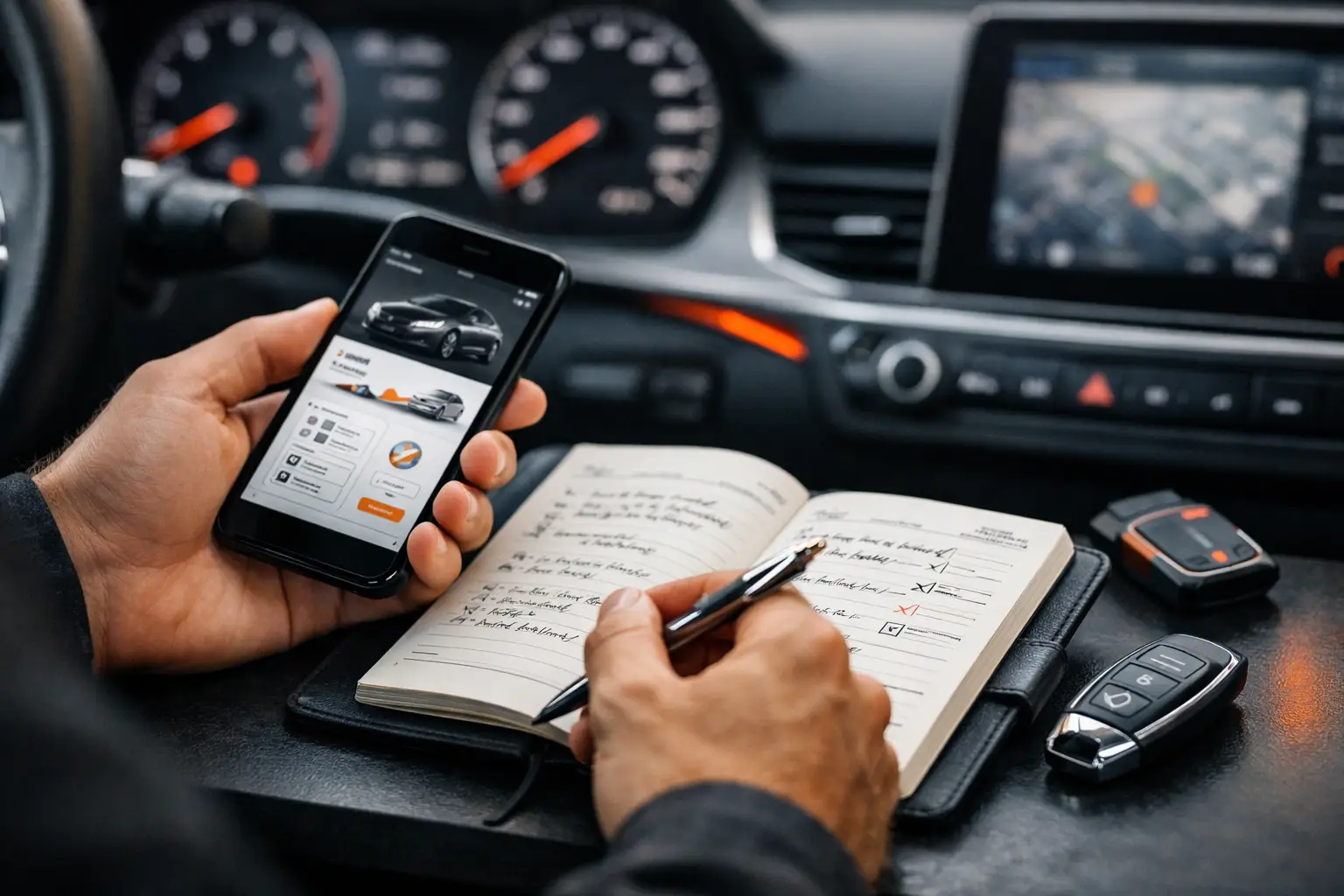
There's no need to turn a quick fill-up into a time-consuming task. The ideal approach is to record it on your phone while still at the station, right after paying. That way the numbers are accurate and the habit doesn't depend on remembering at month's end.
How to record fuel fill-ups step by step
Start by registering the vehicle you'll be tracking correctly. If your household has two cars and a motorcycle, keep their histories separate. The same goes for anyone managing vans, pickup trucks or work vehicles: mixing expenses prevents you from getting a reliable picture of cost and profitability.
When you fill up, check the odometer before you leave the station. Then enter the liters, the total amount and the fuel type used. If you filled the tank completely, mark that detail in your record. This matters because fuel economy calculations become more accurate when you compare two complete consecutive fill-ups.
Finally, double-check that the entry is linked to the right vehicle and save it. In a vehicle management app, this data stays organized in a timeline alongside maintenance, insurance, taxes, repairs and other expenses. Instead of hunting for receipts, you check the history whenever you need to.
Full tank, partial, or just a few liters?
Partial fill-ups should be recorded like any other. They represent money spent and help you see your expense flow. Just be careful when interpreting fuel economy calculated between them.
The most reliable average usually comes from full-tank fill-ups. The logic is simple: fill the tank, record the mileage and at the next complete fill-up, record again. Divide the kilometers driven by the liters you put in at the second stop. The result is your fuel economy in km/l for that period.
For example, if your car was at 45,200 km at the first complete fill-up and reached 45,650 km at the next one, you drove 450 km. If it took 50 liters to top off, your average was 9 km/l. If you added just a few liters without filling the tank somewhere in between, keep the record, but use only the sequence of full fill-ups to evaluate the average with precision.
This doesn't mean every driver needs to chase an exact number. Traffic, air conditioning, load, terrain, tire pressure and driving style all affect the result. The value of your history lies more in the trend than in any single measurement.
Turn your records into better decisions
Once you've logged a few fill-ups, the data starts answering practical questions. How much did you spend this month? What was your cost per kilometer? Did fuel economy improve after a service? Is regular gas or ethanol paying off more for your driving pattern?
Cost per kilometer is especially useful for those who work with their vehicle. Just divide your fuel spending by the distance you drove over that period. If you spent R$900 in fuel to drive 3,000 km, fuel cost R$0.30 per km. This figure doesn't represent your total vehicle cost, since maintenance, tires, insurance, registration and depreciation still exist. But it's an essential baseline to know whether your work income is covering operations.
To decide between regular gas and ethanol, the traditional price comparison at the pump is a starting point, but it doesn't settle the question alone. Ethanol typically yields fewer kilometers per liter. Your best move is to compare the cost per kilometer your own vehicle achieved with each fuel under similar driving conditions. The choice can change depending on traffic, your route and local price differences.
It's also worth watching for sudden shifts. A steady increase in liters needed to cover the same distance could signal under-inflated tires, pending maintenance, a change in your route or a mechanical problem worth investigating. Your record won't diagnose the issue, but it alerts you that something's off the pattern before costs spiral further.
Mistakes that leave your tracking incomplete
The most common mistake is writing down only the amount paid. That creates an expense list, but not a consumption record. Without liters and mileage, there's no way to compare your vehicle's efficiency over time.
Another problem is logging multiple fill-ups all at once at month's end. Rough dates, forgotten amounts and estimated mileage lower the quality of your history. If you can't record it right away, photograph the receipt and enter it the same day.
Also don't compare averages from completely different periods as if they were equivalent. A highway trip with a light load tends to deliver different results than a week of traffic jams, passengers and the air conditioning running. Write an observation when conditions are out of the ordinary. Over time, you'll learn what's normal variation and what needs investigation.
Lastly, don't keep fuel isolated from your other expenses. A car can seem economical at the pump yet still eat into your margin with unplanned repairs, payments, insurance or downtime. The goal is to track the total cost of owning and operating your vehicle, not just a fuel economy number.
A tracking system for every type of driver
For families, records make budgeting easier and keep organized history for when you sell the car. A buyer might not pay more just from seeing a fill-up list, but a vehicle with consistent records signals care and helps explain its use over the years.
For those driving for income, your tracking should connect fuel, mileage and earnings. By comparing revenue against all your vehicle costs, it's easier to evaluate hours, routes and income targets. Driving more kilometers doesn't always mean earning more.
In small teams, sharing the history avoids loose messages and confusion about who filled up, when a cost happened and which vehicle needs attention. A centralized view cuts duplicate entries and makes operations more predictable.
Mine Garage brings together fuel fill-ups, maintenance, expenses, income and vehicle history in one place. That way, the entry you make at the pump isn't isolated: it becomes part of the picture showing what your vehicle uses, costs and delivers day to day.
The best tracking system is one you can actually maintain. Record your next fill-up before you leave the station and let your data work for you when it's time to save money, review your costs or decide whether the vehicle still makes sense for your routine.