How to Schedule Maintenance by Mileage Without Delays
You glance at the odometer and realize your oil change is already overdue. Or you get an unexpected bill because a service that seemed far off got pushed back. Knowing how to schedule maintenance by mileage avoids this kind of surprise and helps keep your vehicle available, safe, and your costs in check.
Mileage is a practical reference because it shows how much your vehicle has actually been driven. For someone who uses their car only on weekends, it may climb slowly. For rideshare drivers, delivery couriers, and small fleet operators, thousands of miles can accumulate in just a few weeks. In both cases, tracking upcoming maintenance in advance is simpler, and usually less expensive, than fixing a problem afterward.
Why maintenance by mileage works
Manufacturers set maintenance intervals because parts, fluids, and filters wear out with use. Oil loses its properties, filters accumulate contaminants, tires wear down, and components like brakes and suspension need inspection. Mileage doesn't replace a professional's assessment, but it creates an objective routine so you don't have to rely on memory.
Your owner's manual should be your starting point. It contains the recommended intervals for each service, which vary based on model, engine type, fuel type, and usage conditions. On many vehicles, regular maintenance happens every 10,000 miles or 12 months, whichever comes first. However, this doesn't mean all items are serviced on the same schedule.
An oil change, for example, may follow a different interval than an air filter replacement, serpentine belt replacement, or brake fluid change. That's why the best scheduling isn't just booking a "general service." It's knowing which services are due now and which can still wait.
How to schedule maintenance by mileage in practice
The process starts by recording your current mileage accurately. Don't use estimates if you can check the dashboard. This number will be the basis for calculating your next service and for tracking how much your vehicle travels each month.
Next, consult the maintenance plan in your manual or your vehicle's service history. If your last oil change was at 45,000 miles and the recommended interval is 10,000 miles, schedule your next service for 55,000 miles. But don't wait until you hit that exact number before contacting a shop. It's best to reach out when you have about 500 to 1,000 miles left, especially if you depend on your vehicle for work.
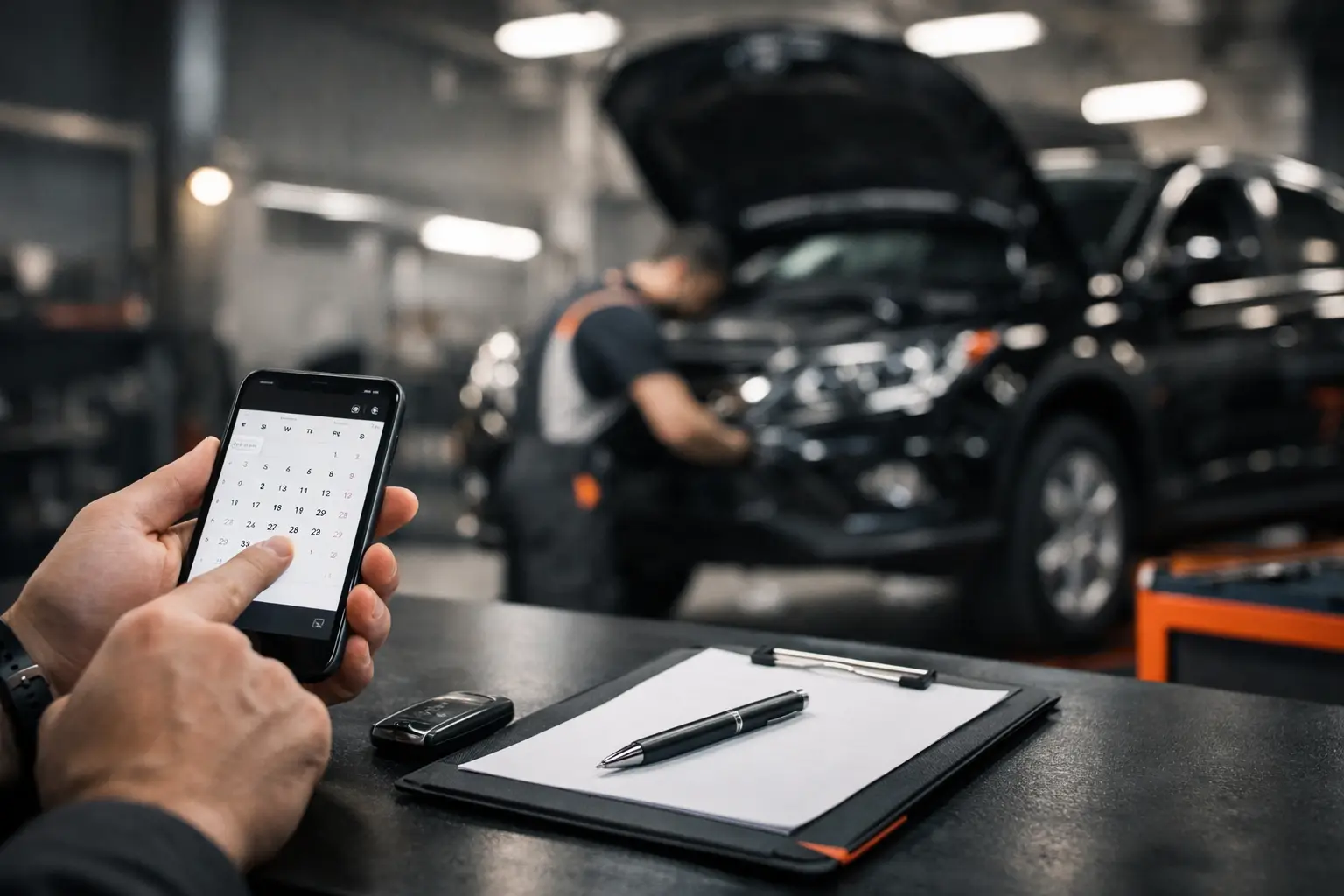
When you call the shop, give them your vehicle's model, year, trim level, current mileage, and the services you believe are approaching their due dates. Ask whether any parts or fluids need to be ordered. This care reduces the risk of having your vehicle sit longer than necessary.
After scheduling, record the appointment date, the projected mileage, and what will be inspected. When the service is complete, save the invoice, the items replaced, the amount paid, and when the next maintenance is due. This history makes a difference at your next service and also adds value if you sell the vehicle later.
Build in a buffer, not a hard deadline
Maintenance by mileage shouldn't be treated as a deadline that only counts in the final mile. If a service is due at 60,000 miles, scheduling it at 59,500 miles is safer than continuing to drive and risk passing the limit. This is even more important during trips, busy work periods, or when the shop's schedule tends to fill up.
The ideal buffer depends on your usage. A family car that doesn't rack up many miles can be scheduled a few weeks in advance. A delivery van or rideshare vehicle, on the other hand, may require weekly planning since mileage climbs quickly and an unplanned stop affects your income.
What to consider beyond the odometer
Mileage is essential, but it doesn't work alone. Some maintenance is time-based, even when a vehicle is driven little. Brake fluid, coolant, battery, tires, and rubber components may require attention based on age, storage conditions, and climate.
There's also severe usage. Heavy traffic, short trips, rough roads, frequent loading, dust, and long periods of idling speed up wear. A driver making many deliveries in urban areas may need more frequent checks than someone covering the same distance on highways.
Your vehicle's signals also demand action before the scheduled date. Brake noise, steering wheel vibration, fuel consumption above normal, warning lights on the dashboard, hard starts, and high temperatures shouldn't wait until the next planned service. In these cases, scheduling shifts from preventive to necessary inspection.
Organize each service in a reliable record
Simply noting "service completed" doesn't help much. A good record separates what was replaced, what was only inspected, and what was recommended for later. This difference prevents paying twice for a service or overlooking important guidance from the shop.
For each maintenance job, keep the mileage, date, cost, service provider, and products used. If oil was changed, record the specification and amount. If tires were replaced, note the brand, size, and installation position. For work vehicles, also link the expense to the correct vehicle to understand its true cost per mile driven.
A vehicle management app like Mine Garage lets you centralize this information, set mileage-based reminders, and keep receipts and services in one history. Instead of hunting through paperwork or trying to remember when you last changed the oil, you check your record and make a decision based on your vehicle's actual data.
For those who work with their vehicle
Professional drivers need to see maintenance as part of their operation. Delaying a service to avoid losing a workday can lead to a longer breakdown, a missed job, or a higher emergency bill. The true cost isn't just the replaced part: it includes wasted fuel, downtime, lost income, and premature wear.
It's worth setting up a simple routine: check your mileage daily or at the end of each shift, review upcoming services once a week, and book the shop during your slower hours. When you have multiple vehicles, centralized tracking helps you stagger services so everything isn't down at once.
Mistakes that cause maintenance delays
The first mistake is relying only on windshield stickers. They can help, but they don't replace a complete history, especially when your vehicle visits different shops. The second is using another car's interval as a reference. Even similar vehicles can have different maintenance plans and specifications.
Another common problem is recording the service without updating the mileage when it was completed. If the oil change was done at 49,300 miles, that's the number that should form the basis for your next calculation, not a rounded figure or something you think you remember.
Finally, don't look only at the service price. Compare what's included, which parts will be used, whether labor is itemized, and whether the shop gives you an invoice. The lowest quote may not be the best choice if it leaves out necessary items or uses products outside the recommended specification.
Turn maintenance into a predictable routine
Scheduling maintenance by mileage becomes easier when tracking is part of your regular vehicle use. Update your mileage after refueling or longer trips, check upcoming services before taking on big commitments, and set aside a budget for preventive maintenance.
You can't predict every repair, but you can avoid most emergencies with clear records and reminders at the right time. Your vehicle remains a tool for mobility, work, and safety. Taking care of it before problems appear is one of the most direct ways to protect your time and your money.