
How to Record an Oil Change Without Losing Track
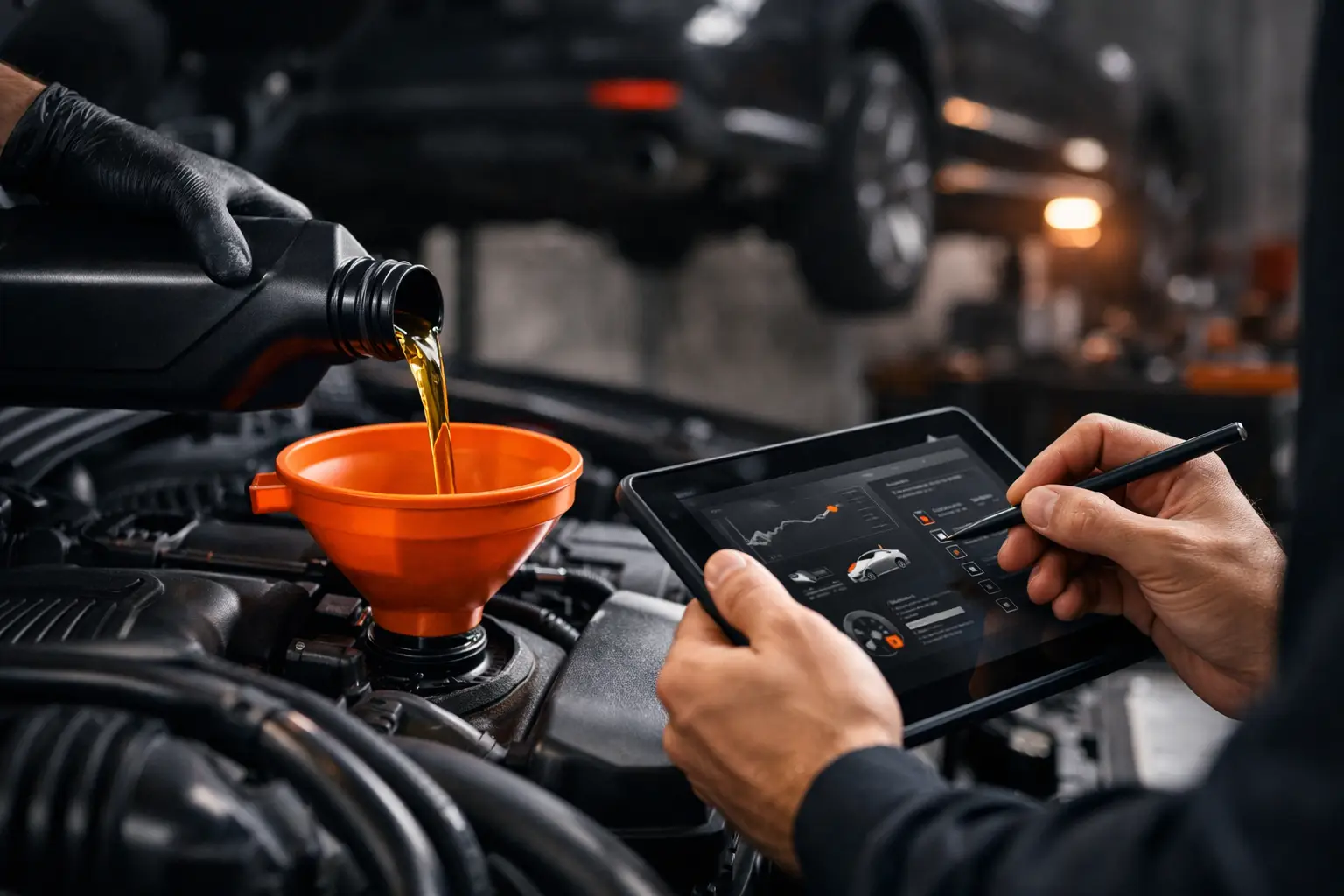
Recording an oil change seems straightforward until you need to remember when it was done, what product went into the engine, and how much you spent. For drivers who use their cars daily, work with deliveries, or manage more than one vehicle, knowing how to record an oil change prevents delays, avoids surprises, and turns routine maintenance into useful information for better decisions.
Shop receipts go missing. Notes in a pad get forgotten. And relying on memory alone usually works until the next service is due. A proper record keeps everything in one place, shows the real cost of keeping your vehicle running, and helps you schedule the next oil change before you miss the deadline.
What to record during an oil change
Start with the basics: record the date and the mileage shown on your dashboard on the day of service. These two pieces of information let you track both the distance interval and the time interval, since many manufacturers recommend changing oil after a certain distance or period, even if the vehicle doesn't drive much.
Next, note the type and specification of the oil used. Don't just write "oil change." Details like viscosity, for example 5W-30 or 10W-40, the classification recommended by the manufacturer, the brand, and the quantity put in the engine make the record more reliable. This is especially useful when more than one person maintains the vehicle, when you switch shops, or when you need to verify that the product used matches the manual's recommendation.
It's also worth recording the oil filter. In most oil changes, it's replaced along with the lubricant, but not always. Recording this information prevents future confusion and helps keep a complete history. If the air filter, fuel filter, additives, labor, or additional inspection work was done, include each item in the same entry or in separate records, whichever way you prefer to track costs.
Finally, save the total amount and, if possible, separate material costs from labor. For a private driver, this helps you understand how much your car requires over a year. For those working with ride-sharing, deliveries, or field service, this value goes directly into calculating the cost per mile and the vehicle's profitability.
How to record an oil change step by step
The best time to create the record is right after you leave the shop or finish the job at home. Waiting until later in the day increases the chance of forgetting the mileage, price, or oil specification.
Start by selecting the correct vehicle. This might seem obvious, but it matters for families, professionals, and small businesses that maintain cars, motorcycles, vans, or trucks in the same system. Next, register the service as an oil change maintenance item and enter the date, current mileage, and amount paid.
In the description field, write in a way you'll recognize the service months later. A note like "synthetic 5W-30 oil, 4 quarts, filter replaced" is far more useful than just "service." If the shop recommended returning after 10,000 miles or six months, record that guidance exactly as they gave it, always respecting your vehicle's manual and your actual driving conditions.
Attach a photo of the receipt when that option is available. The file serves as proof of expense, helps with any warranty claim, and makes things easier when you sell the vehicle. A clear maintenance history shows a potential buyer that the car has been well cared for.
In a vehicle management app like Mine Garage, the entry can be linked to the vehicle, expenses, and upcoming reminders. That way, your history stays organized in one place instead of scattered across photos, papers, and messages, and you can quickly check what's been done on each vehicle.
Set the next due date using two criteria
The next oil change shouldn't depend only on a date written on your windshield. Set one goal based on mileage and another based on time. Whichever limit you hit first, it's time to check maintenance.
This matters because usage patterns change everything. A car driven 1,500 miles a month might reach its mileage limit quickly. A vehicle that sits for long periods might need attention based on time, since oil also breaks down over time. Heavy traffic, short trips, dust, towing loads, and intensive commercial use might require shorter intervals than light use.
There's no universal interval that replaces the manufacturer's guidance. The manual is your primary reference, and the shop's recommendation should be evaluated based on the product used and your operating conditions. Recording this reasoning makes it clear why you chose that interval.
Why accurate mileage matters
Entering an approximate mileage weakens the entire record. Without a reliable number, it's hard to calculate the distance since the last oil change, spot spending patterns, and get alerts at the right time.
For those who refuel and record the odometer frequently, the task becomes even easier: the system can connect maintenance, fuel consumption, and costs to your driving period. Over time, this reveals whether a vehicle is demanding higher expenses than expected or whether a certain maintenance routine is helping avoid bigger problems down the road.
For professional drivers, mileage also lets you divide the oil change cost across the miles driven. The total cost might seem small in isolation, but it makes sense when compared to fuel, tires, washing, insurance, tolls, and other operating expenses.
Record the complete cost, not just the oil
An oil change often comes with other items. If you record only the lubricant cost, your financial history will be incomplete. Include the filter, labor, fees, and any additional parts. If you had a larger service done the same day, separating the services lets you see later exactly how much was spent on the oil change itself.
This separation also helps you compare shops without relying on gut feelings. One shop might charge less for labor but use different oil or not include the filter. Another might have a higher final price because they used products that matched your specification. The point of good record-keeping isn't always to choose the lowest price, but to see what you bought and decide with confidence.
For small fleet owners, standardizing this information by vehicle prevents a skewed view of costs. You might notice, for example, whether a van that logs more miles is getting maintenance on schedule or whether a car is piling up overdue services from lack of attention.
Common mistakes that ruin your history
The most frequent mistake is recording the service without the mileage. The second is failing to set the next reminder. Without this data, the note becomes only a memory of the past, not a tool for caring for the future.
It's also common to copy another vehicle's recommendation. The oil specified for a motorcycle doesn't automatically work for a car, and two similar models might have different specifications and intervals. Check the manual, consider warranty coverage when relevant, and confirm compatibility before having the work done.
Another problem is lumping all expenses into a generic category like "maintenance." This works if you want only a simple overview, but it limits the analysis for anyone who depends on the vehicle for work. Separating oil changes, tires, repairs, and services shows where your money is going and where you can plan better.
Turn record-keeping into a care routine
Recording an oil change takes just a few minutes when you follow a pattern. Always use the same fields: date, odometer, products, filters, shop, cost, receipt, and next due date. After a few services, your history stops being a chore and becomes a practical reference for any decision about your vehicle.
If the car is shared at home, everyone can check the last service before scheduling a shop visit. If it generates income, each maintenance becomes part of a more realistic view of monthly results. If you manage a small fleet, centralized tracking reduces messages, side spreadsheets, and forgotten services.
The engine won't warn you in advance that a deadline has passed. But an updated record can warn you. Start at your next oil change, write down the details while they're in hand, and let your history work in favor of a better-maintained vehicle and more predictable costs.