Gasoline or Ethanol for Deliveries: Which Makes More Sense?
A difference of a few cents at the pump might seem small, but for someone on the road all day, it adds up with every kilometer and weighs on your monthly bottom line. Deciding between gasoline or ethanol for deliveries shouldn't depend only on the price displayed at the station. What matters is how much each fuel costs to keep your vehicle working, with enough range and without cutting into your margin.
For delivery drivers, app-based drivers, service providers and small fleets, fuel is one of the most frequent operating expenses. The best choice changes depending on your vehicle, route, traffic, load and the prices in your region. The right decision starts when you replace guesswork with actual records.
Gasoline or ethanol for deliveries: look at cost per kilometer
The 70% rule is well known: if ethanol costs less than 70% of gasoline, it tends to pay off in flex-fuel cars. It's a good starting point, but it shouldn't be your only reference if you work deliveries.
That calculation assumes an average fuel economy. In reality, each vehicle performs differently. One car might get 11 km/l with gasoline and 7 km/l with ethanol in city driving. Another, with a more efficient engine, might have a smaller difference. With motorcycles, vans and vehicles carrying weight, the result varies a lot too.
The most reliable calculation is simple:
Cost per kilometer = amount spent ÷ kilometers driven since last fill-up
If you spent $50 and drove 250 km until you needed to refuel again, your cost was $0.20 per km. Do this calculation for both fuels over similar periods. Compare weeks with similar routes, loads and traffic conditions to avoid jumping to conclusions.
Price per liter catches your attention at the pump. Cost per kilometer shows the real impact on your wallet.
Why ethanol might pay off
Ethanol usually costs less per liter, and in certain regions, the difference is big enough to overcome its higher consumption. When your vehicle gets good mileage with ethanol and the station offers a competitive price, it can lower your operating costs.
There's also a practical aspect: many flex-fuel vehicles deliver good acceleration response with ethanol. On city routes with lots of starts, stops, hills and pickups, this can make driving more pleasant. But performance doesn't replace expense control. If consumption rises too much, the price advantage at the pump disappears quickly.
For those doing short deliveries, returning to a home base or office daily and finding stations easily, ethanol's shorter range might not be an issue. In that scenario, refueling more often can be acceptable if cost per kilometer stays lower.
There's also a seasonal factor. In colder periods, ethanol consumption can increase and starting the engine may require more attention, depending on your vehicle. Tracking your own numbers helps identify whether this change affects your operation.
When gasoline tends to be the safer choice
Gasoline generally offers greater range. This makes a difference for those covering long distances, serving areas with few stations, working on tight schedules or not wanting to lose time refueling during your shift.
An unplanned stop has a cost. Beyond the fuel itself, there's the time without making deliveries, the drive to the station and, in some cases, a missed route or job. That's why a fuel that seems pricier per km can still make sense when it reduces stops and makes your workday more predictable.
Gasoline can also be more advantageous when ethanol prices are too close to its value. If ethanol costs 68% of gasoline but your vehicle consumes much more in heavy traffic, the real math might favor gasoline. That's why the 70% rule doesn't replace tracking your actual consumption.
For vans, vehicles that regularly carry loads and cars that stay running for many hours, it's worth looking at range alongside cost per km. A tank that lets you complete a long day without interruptions can be operationally more valuable than small savings per fill-up.
Don't compare single fill-ups
One tank doesn't tell the whole story. You might hit unusual traffic, take a route with lots of hills, use more air conditioning or carry extra weight. All of this changes consumption.
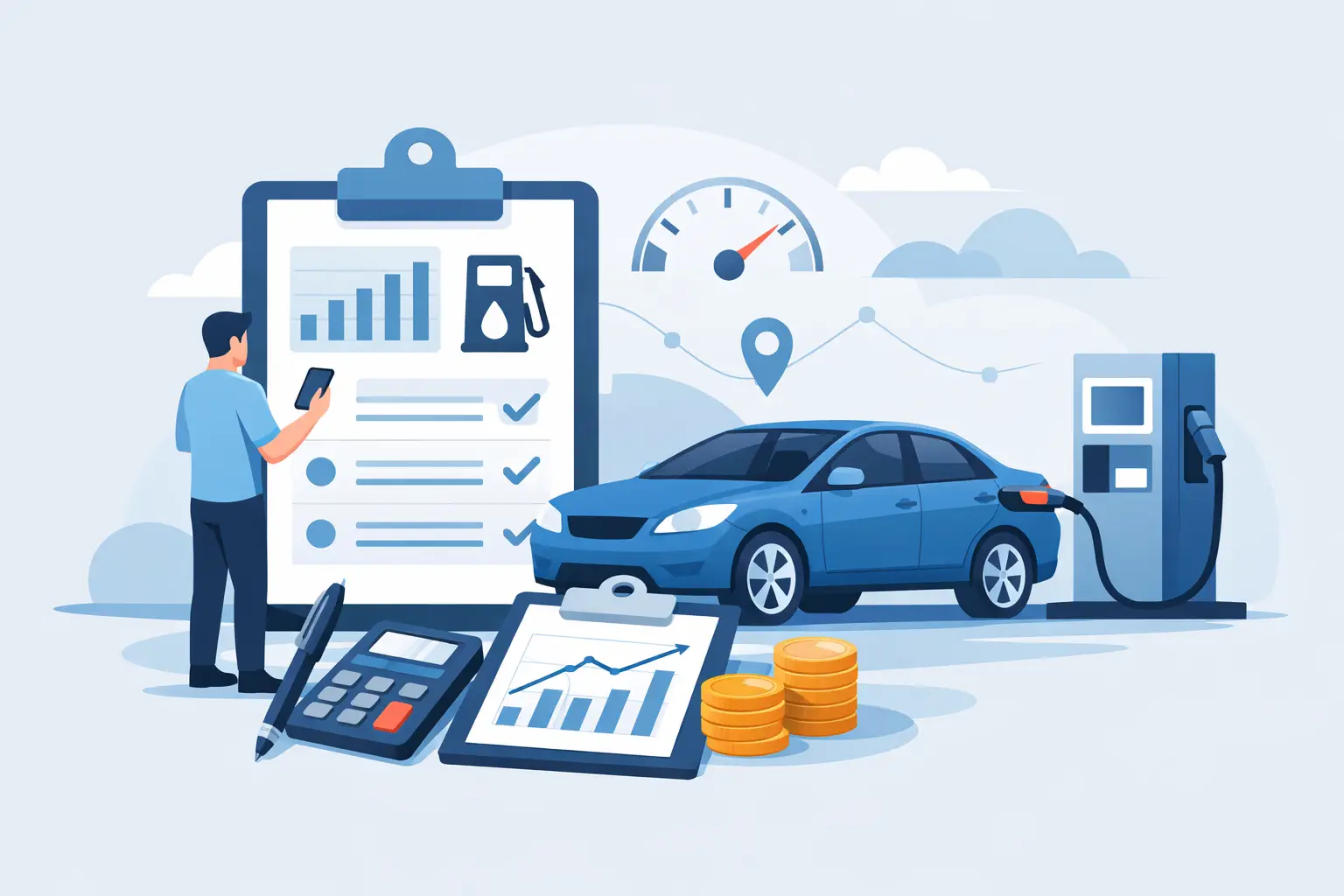
The ideal approach is to test each fuel over several complete fill-ups. Record the date, odometer reading, liters, amount paid and fuel type. Then look at average consumption and cost per kilometer instead of focusing on one result.
It also helps to keep your refueling consistent. Filling to the same level and recording mileage correctly reduces distortions. You don't need to turn your routine into a complicated spreadsheet. The goal is to have enough data to answer one straightforward question: which fuel leaves more money in my pocket after driving?
A vehicle management app like Mine Garage helps you keep all these records in one place. By logging fill-ups and mileage, you can track fuel consumption, expenses and vehicle costs without relying on loose receipts or memory.
What changes for each type of operation
For delivery drivers working mainly in nearby neighborhoods, cost per km is usually the main indicator. If ethanol shows consistent savings and the range covers the day, it might be the better choice.
For those making deliveries across towns or working in large areas, gasoline can bring more peace of mind. Fewer stops help you stick to your route and avoid rushed refueling decisions when the nearest station doesn't always have the best price.
Drivers who use their car for both deliveries and other work should separate professional fuel consumption from personal use when possible. Weekend family trips, different routes or transporting passengers changes the average. The clearer your activity records, the more reliable your comparison.
In small fleets, there's no single answer for all vehicles. Two identical cars can consume differently because of the driver, maintenance, tires, load and route type. Compare performance by vehicle, not just the fleet average. This helps you spot both a savings opportunity and a possible mechanical issue.
High consumption isn't always the fuel's fault
If numbers suddenly got worse, before blaming gasoline or ethanol, check your vehicle's condition. Incorrect tire pressure, misalignment, expired filters, worn spark plugs and overdue maintenance can increase consumption.
Your driving style matters too. Harsh acceleration, excessive idling, extra weight and inconsistent speed increase fuel use, especially in city traffic. You can't always control the route or congestion, but tracking the average helps you notice what changed.
When you record fill-ups alongside services, oil changes and other maintenance, it's easier to connect the dots. If consumption jumped after a period without service or dropped after fixing something, the history shows that relationship.
A decision that needs to keep up with the market
Don't choose one fuel for the year based on one fill-up. Prices change by region, season and station. Your work volume also changes: a week with more deliveries, rain, heavy traffic or longer routes can completely shift the result.
Build the habit of reviewing your numbers weekly or monthly. See how much each fuel returned, what your cost per kilometer was and how much you spent to keep the vehicle running. For someone who lives behind the wheel, this tracking is as useful as knowing how many deliveries you completed.
The best answer for gasoline or ethanol in deliveries doesn't come from a fixed rule. It emerges from your vehicle's data, your routes and your routine. Recording each fill-up today can prevent a small daily decision from becoming a big expense by month's end.