How to Control Your Car Expenses Without the Hassle
Filling up the tank seems like an isolated expense until you add in oil changes, tires, insurance, parking, car washes, traffic tickets, and minor repairs. That's when many drivers realize they have no idea how much their vehicle actually costs. Learning how to control your car expenses starts by replacing guesswork with simple records, made every time you spend money.
This isn't about cutting corners or neglecting your car to save money. Quite the opposite: tracking costs helps you prioritize the right maintenance, spot unnecessary spending, and prevent small problems from becoming big bills. For those who work with ride-sharing, deliveries, or client visits, this control also shows whether the vehicle is actually profitable.
Start with real costs, not memory
Memory fails us precisely on smaller expenses. A coffee on the road, a parking fee, or a bulb replacement seem unimportant at the time, but they add up over the month. Keeping receipts in a drawer doesn't help if you never total them up and compare them.
Get in the habit of recording each expense the same day. Note the amount, date, mileage, and category. Fuel, maintenance, registration, insurance, cleaning, parking, tolls, and accessories are useful categories because they show you exactly where your money is going.
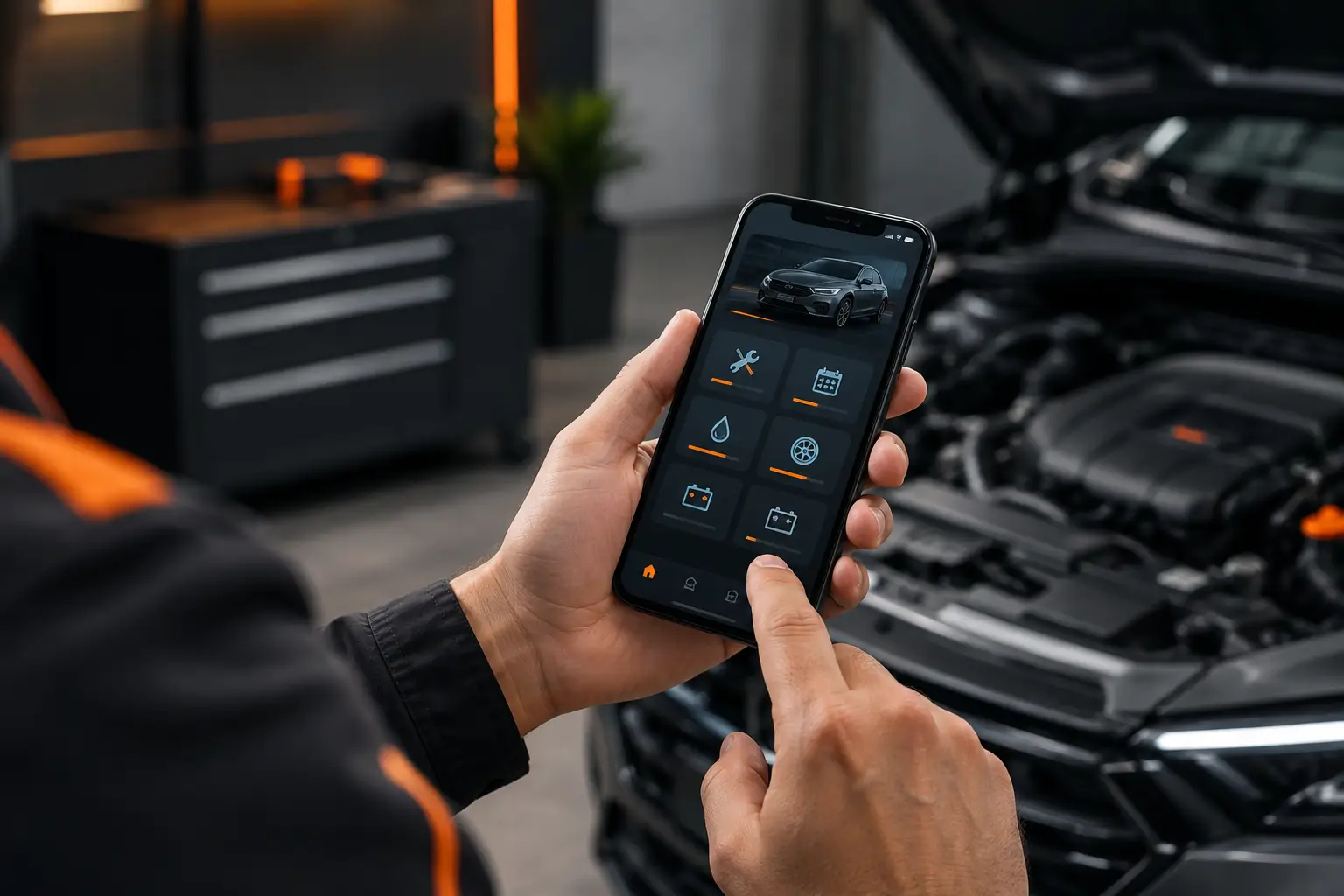
The goal isn't to turn your routine into a complicated spreadsheet. It's to have a reliable history. A vehicle management app like Mine Garage centralizes this information and lets you check your vehicle's history without relying on papers, loose photos, or memory.
Separate fixed expenses from variable ones
This split makes your budget much easier to see. Fixed expenses are those that exist whether you drive or not: insurance, vehicle tax, registration, financing, roadside assistance, and sometimes parking. They should be part of your monthly planning, even if you pay them once a year.
A practical approach is to divide yearly amounts by 12. If insurance costs $2,400 a year, budget $200 a month for your car. When renewal comes, the cost won't catch you off guard.
Variable expenses track your actual use. Fuel, tolls, parking, car washes, repairs, and tire wear increase with mileage. They deserve special attention because these are the costs where you usually have the most control.
For ride-share drivers or delivery workers, it's also worth separating personal expenses from work expenses. Driving to generate income can boost your earnings, but it also speeds up service intervals, increases fuel consumption, and wears out tires faster. Without this separation, it's easy to confuse money coming in with actual profit.
Track fuel consumption by mileage
Fuel is usually the biggest recurring expense for regular drivers. So it's not enough to know what you paid at the pump. The most useful number is consumption: how many kilometers your vehicle travels per liter and what each kilometer costs.
To calculate this, record the mileage when you fill up, how many liters you added, and the total amount. After a few complete fill-ups, you'll have a more reliable average. If consumption suddenly gets worse, investigate before it becomes the norm.
Not every variation means something is broken. Heavy traffic, air conditioning, extra load, short trips, improper tire pressure, and fuel price changes all affect your numbers. Still, a persistent drop in fuel economy can point to spark plugs, filters, alignment, tires, or even an engine problem.
It's also worth comparing gas stations and fuel types, but thoughtfully. The cheapest per liter isn't automatically your best choice if consumption drops or the fuel quality is questionable. Track a few fill-ups under similar conditions before making a decision.
Control maintenance before things break
Putting off maintenance looks like savings until the first breakdown. Skipping an oil change, ignoring an expired fluid, or pushing brake pads to their limit can cause bigger damage, leave you stranded, and compromise safety.
Create a schedule based on your manufacturer's manual and your vehicle's actual use. Oil changes, filters, brake inspections, alignment, balancing, belts, and tires all have different intervals. Those who drive a lot in heavy traffic, on rough roads, or with heavy loads may need to do some services sooner.
Recording services performed is just as important as scheduling the next ones. Note parts, labor, mileage, shop, and warranty. This history prevents duplicate work, makes conversations with your mechanic easier, and adds credibility if you decide to sell.
Preventive maintenance costs money, but it's predictable. Corrective maintenance usually arrives without warning and almost always costs more. The balance is following reliable recommendations without replacing parts under pressure or accepting work you don't understand.
Build a reserve for predictable expenses
Tires don't fail overnight, and yearly registration fees shouldn't surprise you either. After a few months of records, you'll be able to predict most of your car's expenses and set aside a monthly amount for them.
Consider saving for maintenance, registration, and unexpected costs. The amount depends on your vehicle's age, model, mileage, and condition. An older car might need a bigger reserve; a newer one might have more predictable scheduled services, but will still have insurance, tires, and depreciation.
You don't need to get the number perfect in month one. Start with a realistic target and adjust as your history grows. What matters most is not using your credit limit or taking out a loan to pay for a tire replacement you already saw coming.
Review expenses that became automatic
Some costs keep getting paid because no one stops to evaluate them. Insurance, subscriptions, car wash services, monthly parking, and even tolled routes deserve regular review. The question isn't just "how much does it cost?" but "does it still make sense for my routine?"
Cutting essential coverage to pay less can be expensive if you have an accident. On the other hand, paying for duplicate coverage or a service you don't use won't improve your car's protection. Compare coverage, deductibles, and terms before renewing.
The same goes for driving habits. Grouping errands on the same route, avoiding unnecessary acceleration, and keeping tires properly inflated can reduce costs without making driving feel like a chore. Small savings add up when they happen every week.
How to control car expenses when the car generates income
For professional drivers, cost isn't just financial information: it's part of operations. Knowing your total monthly spending without comparing it to earnings doesn't show whether the work is actually profitable.
Track income and expenses by vehicle, and ideally by work period. Then compare revenue, fuel, tolls, maintenance, and mileage. The results help you find which days, times, or types of work pay better.
Also calculate cost per kilometer. It shows how much each kilometer you drive eats into your earnings before you take your profit. There's no one ideal number for everyone, since fuel prices, car type, location, and work type vary greatly. What matters is tracking the trend and acting when it gets worse.
In a small fleet, tracking needs to be centralized. Each driver should be able to record fill-ups, issues, and expenses, while the manager tracks deadlines, costs, and history for each vehicle. This prevents information gaps and helps spot patterns, like a vehicle that burns more fuel or needs frequent repairs.
Use the data to decide, not just to record
Records only gain value when they guide a choice. At the end of each month, spend a few minutes looking at three things: what was your biggest expense category, what changed from the previous month, and what concrete action can reduce risk or waste next month.
Maybe fuel went up because you drove more, which could be normal. Maybe it went up without extra mileage, suggesting worse consumption or more expensive fill-ups. Maybe maintenance was heavy because you grouped overdue services. Context prevents hasty decisions.
After a few months of history, you'll also have a clearer picture of whether to keep or replace your car. An older vehicle isn't always expensive, just as a new car isn't automatically economical. Compare payments, insurance, consumption, maintenance, taxes, and resale value before deciding.
Controlling expenses doesn't take away your freedom to use your car. It gives you the confidence to know what each trip costs, what needs attention, and where you can improve. When your history is organized, caring for your vehicle stops being a series of surprises and becomes a well-informed decision.