
App Driver Profit: Calculate It Right
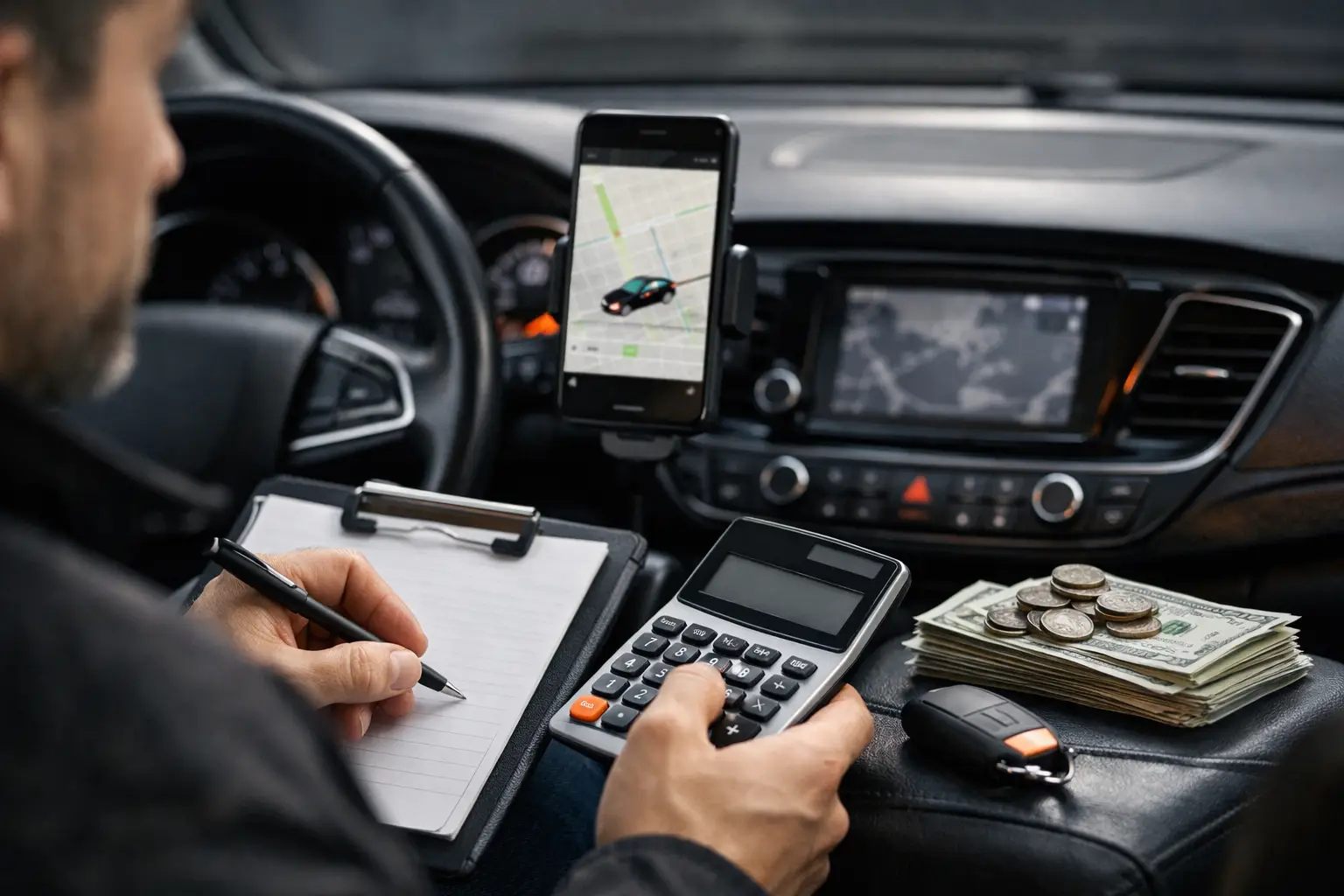
A $30 ride might look like good earnings until you factor in fuel, the distance to pick up your passenger, tire wear, and your next maintenance bill. An app driver's profit isn't the total showing on your screen at the end of the day. It's what's left after paying for everything your car needs to keep working.
This difference shapes important decisions: which hours are worth it, how much to drive per day, when to decline a long ride, and even which vehicle makes sense to use. Drivers who track only their total revenue might work hard and discover too late that their margin is too thin.
App driver profit is not revenue
Revenue is all the money you receive from rides, deliveries, tips, bonuses, and incentives. Profit is revenue minus all the costs needed to generate that income. It sounds simple, but the most common mistake is deducting only fuel.
Here's the basic formula:
Profit = revenue received - variable costs - fixed costs - reserves for maintenance and taxes
Before you start, decide what counts as revenue. If the app already shows you the net amount after the platform's cut, use that number: don't subtract the commission again. If you're recording what the passenger paid, then the app's commission is a cost. The important thing is to stick with one method throughout the month.
It also helps to keep your work money separate from personal money. A separate account, or even just a category in your financial tracking, makes it easier to see whether your vehicle is covering its own expenses and actually paying you for your time.
The costs that cut into your app driver profit
Fuel is usually the biggest daily expense, but it's not the only one. A car carrying passengers on the road covers more distance, sits in traffic, starts and stops repeatedly, and needs maintenance more often. Overlooking these items turns short-term savings into a painful bill later.
Variable costs: track every fill-up
Fuel, electric charging, tolls, parking, car washes to maintain your service standards, and meals during your shift are all tied to running the vehicle. Not every cost happens on every ride, but they add up as you work.
Record each fill-up with the amount, liters, odometer reading, and fuel type. With this data, you can calculate your car's real consumption and spot if it's getting worse. An unexpected drop in miles per gallon can signal heavier traffic, a change in driving habits, low tire pressure, or a need for service.
Tolls and parking deserve special attention. In some areas, a longer ride pays well upfront but leaves you far from areas with passenger demand, or forces you to drive back empty. The ride fare alone doesn't tell that story.
Fixed costs: they exist even on days off
Insurance, roadside assistance, a loan payment, vehicle registration tax, license renewal, your phone plan, vehicle rental, and part of depreciation don't vanish when you take a day off. You need to spread them across the days or miles you actually work.
If insurance costs $240 a month and you work 24 days, that's $10 per working day. This calculation helps set a more realistic daily target. If you're renting the car, the rental cost is even more critical: it creates a revenue goal before your first ride.
Maintenance isn't a surprise: it's a reserve
Oil, filters, brake pads, tires, alignment, balancing, suspension, battery, and servicing are predictable, even if the timing isn't exact. The problem is many drivers only record the cost when they actually pay for it. That's when it looks like the month suddenly went negative, even though the expense was building up with every mile you drove.
Set aside a reserve per mile or per week for maintenance. The amount depends on your car's age, condition, how you use it, and the roads you drive on, but the habit of reserving matters more than getting the number perfect on day one. After a few months of tracking, you'll have an average based on your actual vehicle.
How to calculate profit per mile and per hour
Two metrics help you stop guessing: profit per mile and profit per hour online. They show whether your operation is healthy and whether your time is being paid fairly.
Say one week you earned $2,000 in rides and bonuses. You drove 560 miles total, including trips to pick up passengers and empty returns. You spent $400 on fuel, $70 on tolls and washes, set aside $110 for maintenance, and allocated $160 for proportional fixed costs. Your operating profit for the week was $1,320.
In that scenario, your profit per mile was about $2.36. If you spent 40 hours online, your profit per hour was $33. These numbers aren't meant to compare different cities directly: fuel, fares, traffic, and demand vary too much. They're meant to track your own operation over time.
If your profit per hour dropped, ask whether you spent more time waiting for rides, worked during weak hours, or accepted trips with low margins. If profit per mile dropped, look at fuel consumption, routes, tolls, empty miles, and maintenance costs. A single week won't show you a trend. Four to eight weeks usually gives a clearer picture.
Log total miles, not just ride miles
The miles shown by the app almost never match your total vehicle use. There's the drive to the pick-up point, the return after a long ride to a remote area, the trip to the gas station, and sometimes the drive from home to where you start working.
To understand your real profit, record your odometer at the start and end of your shift. This shows the cost of empty miles, which often go unnoticed. This doesn't mean you should refuse every long-distance ride. During busy times, taking a ride that repositions you can pay off. The difference is deciding based on data, not just the feeling that the fare was good.
Also keep maintenance records by date and mileage. When you need an oil change or new tires, you'll know what was done, what it cost, and how long the previous item lasted. This improves your planning and helps you spot unusual expenses.
Use the data to improve margins without overworking your car
Raising profit doesn't mean driving as much as possible. Often, it means eliminating waste and organizing your operation better. Tracking which days and times deliver the best results can guide your schedule. Similarly, knowing your consumption on city roads helps you choose where to fuel up and decide whether ethanol or gas makes sense for your car, based on price and actual performance.
Preventive maintenance also protects your margin. Skipping an oil change, ignoring a suspension noise, or running on poorly inflated tires might look like short-term savings, but it increases the risk of higher consumption, breakdowns, and time off the road. For someone who depends on the vehicle, a car that's not working means lost income.
A vehicle management app like Mine Garage lets you centralize earnings, fill-ups, expenses, maintenance reminders, and mileage in one place. Instead of hunting for receipts or trying to piece together the month from memory, you can track your operating costs and vehicle profitability with real clarity.
Set a target that includes your own paycheck
After calculating costs, one thing is still missing: what you want to earn for your work. A driver shouldn't count profit as only what's left to refuel and repair the car. The operation needs to cover expenses, build reserves, and still pay you for time behind the wheel.
Set a monthly income target and add your average costs. Divide the total by the days you plan to work. This daily target is a reference point, not a hard rule. Some days are slow, unexpected things happen, and busy seasons come and go. The tracking helps you adjust before the month ends up disappointing.
Tracking app driver profit is a practical way to protect the vehicle that supports your livelihood. When every mile, every fill-up, and every maintenance visit count toward your numbers, you stop just chasing rides and start choosing how to work smarter.